
Where The
Mountains
Remove Everything
Unnecessary
A Complete Guide To Chopta — The Meadow Village At 2,700 M Where Pine Forests, Snowfall, And Himalayan Stillness Slow Everything Down.
The Kind Of Place You Don't Expect
Chopta Is Not A Town In The Conventional Sense. There Are No Busy Markets, No Traffic Circles, And No Endless Rows Of Hotels Competing For Attention. The Settlement Is Little More Than A Handful Of Lodges, Camps, Roadside Cafés, And Forest Clearings Scattered Across A Himalayan Meadow At Approximately 2,700 Metres Above Sea Level.
The First Thing You Notice Is How Much Space There Is Between Sounds. Wind Moves Through The Deodar And Rhododendron Forests. Bells Ring Occasionally From Distant Temples. Clouds Drift Across The Slopes Slowly Enough To Make Time Feel Irrelevant. Even During The Busiest Trekking Months, Chopta Rarely Feels Crowded.
Many Visitors Come Here For The Famous Tungnath–Chandrashila Trek, But The Mountain Views Are Only Part Of The Experience. Chopta Rewards People Who Do Very Little. Sitting Outside A Wooden Lodge With A Cup Of Tea. Watching Sunrise Paint The Chaukhamba Range Gold. Walking Through Mist-Covered Forests Without A Destination. These Moments Often Become The Memories Travellers Talk About Long After The Trek Is Over.
Unlike Destinations Built Around Sightseeing Checklists, Chopta Is A Place That Encourages You To Slow Down. Spend Two Or Three Nights Here And You Begin To Understand Why So Many Travellers Return. The Mountains Are Spectacular, But It Is The Stillness Between Them That Makes Chopta Special.
Quick Overview
Why Visit Chopta
The Obvious Answer Is The Trek. The Chandrashila Summit And Tungnath Temple — The Highest Shiva Temple In The World — Sit At The End Of A Trail That Begins Right At The Edge Of The Chopta Meadow. It Is One Of Uttarakhand's Most Rewarding Short Treks And, If This Is Your First Visit, You Should Absolutely Do It.
But The Less Obvious Answer — The One That Keeps People Coming Back — Is The Place Itself.
Chopta Lies Within The Kedarnath Wildlife Sanctuary, Which Means The Forest Around It Has Largely Escaped Commercial Development. Pine, Oak, And Rhododendron Forests Cover The Hillsides. The Meadows, Known Locally As Bugyals, Stretch Open Beneath Snow-Capped Peaks And Create A Landscape That Feels Far Removed From Everyday Life.
Many Travellers Discover Chopta While Researching The Chandrashila Trek, Yet The Destination Deserves Attention In Its Own Right. Whether You Arrive For Snowfall, Himalayan Views, Camping, Birdwatching, Photography, Or Simply A Few Days Of Quiet, Chopta Offers A Side Of Uttarakhand That Is Becoming Increasingly Rare.
"Chopta Doesn't Compete With Uttarakhand's Famous Hill Stations. It Wins By Refusing To Become One."
Compared To Destinations Such As Mussoorie, Nainital, Or Auli, Chopta Has Very Little Tourist Infrastructure. There Are No Malls, No Crowded Promenades, And No Endless List Of Attractions. What It Offers Instead Is Space — Space To Walk, Think, Read, Hike, Watch Clouds Drift Across Valleys, And Spend Time Outdoors Without Feeling Rushed.
For Travellers Who Appreciate Slow Travel, Chopta Can Feel Unusually Generous. A Day Here Might Be Spent On A Forest Trail, A Long Lunch Over Tea, A Quiet Sunset Behind Chaukhamba, Or A Night Under Some Of The Clearest Skies In Uttarakhand. In A World Obsessed With More, Chopta's Greatest Luxury Is That It Asks For Less.
Best Time to Visit Chopta
Chopta is worth visiting in almost every season, but each window offers a fundamentally different experience. Choose based on what you're actually after.
Chopta's most dramatic avatar. Deep snowfall, silent forests, -10°C nights. The version people talk about longest.
Snow gives way to rhododendron bloom. Muddy trails, fresh air, extraordinary colour through the forest.
Lush meadows, open roads, comfortable temperatures. The most accessible window for first-timers.
Post-monsoon clarity. The Himalayan panorama from Chandrashila is at its most dramatic. Crisp golden mornings.
Monsoon: July to August
Avoid. The Garhwal Himalayas receive heavy rainfall and the mountain roads towards Chopta — particularly the stretch through Ukhimath — see frequent landslides. The risk-to-reward ratio simply doesn't work.
Autumn: The Golden Window
October and early November are the most consistently recommended season, and for good reason. Post-monsoon skies in Uttarakhand are spectacularly clear. The Himalayan panorama from the Chandrashila Trek in October — Nanda Devi, Trishul, Kedardome, Chaukhamba — is at its most dramatic. Temperatures are crisp but manageable, crowds are thin, and the light in the mornings has that particular golden-hour quality that makes everything look like a photograph taken on film.
Winter: The Most Remembered Season
January is the most reliable month for deep snow — fewest visitors, most atmospheric. Come with proper gear, a flexible schedule, and the acceptance that road conditions may change your plans. That uncertainty is part of what makes winter in Chopta feel real.
How To Reach Chopta
Chopta is roughly 165–170 km from Rishikesh and around 225 km from Haridwar. There is no direct train or airport connection, so reaching Chopta requires a road journey through the Garhwal Himalayas.
Most Common Route
Rishikesh → Devprayag → Srinagar → Rudraprayag → Ukhimath → Chopta
Distance: 165–170 km
Travel Time: 6–8 Hours
Road Condition: Mostly Good, With Mountain Roads After Rudraprayag
How To Reach Chopta From Rishikesh
This is the most common starting point. The route follows the Ganga north to Devprayag before tracking the Alaknanda Valley through Rudraprayag and Ukhimath. If you have not already explored the city, our Rishikesh Travel Guide covers everything from cafés and rafting to nearby day trips.
| Rented Scooter Or Bike | Most flexible option. Start early and avoid mountain roads after dark. |
| Shared Taxi | Available towards Ukhimath, then continue by local transport to Chopta. |
| Private Cab | Comfortable and direct. Ideal for families and small groups. |
| State Bus | Budget-friendly option via Rudraprayag and Ukhimath. |
Petrol pumps become sparse as you approach Chopta. Fill your tank completely at Ukhimath and avoid relying on roadside fuel vendors.
How To Reach Chopta From Haridwar
Haridwar is around 225–230 km from Chopta by road. The route is almost identical to the Rishikesh route, adding approximately 30–45 minutes of travel time. Many travellers combine Haridwar, Rishikesh, Chopta and the Chandrashila Trek into one Uttarakhand itinerary.
A Separate World
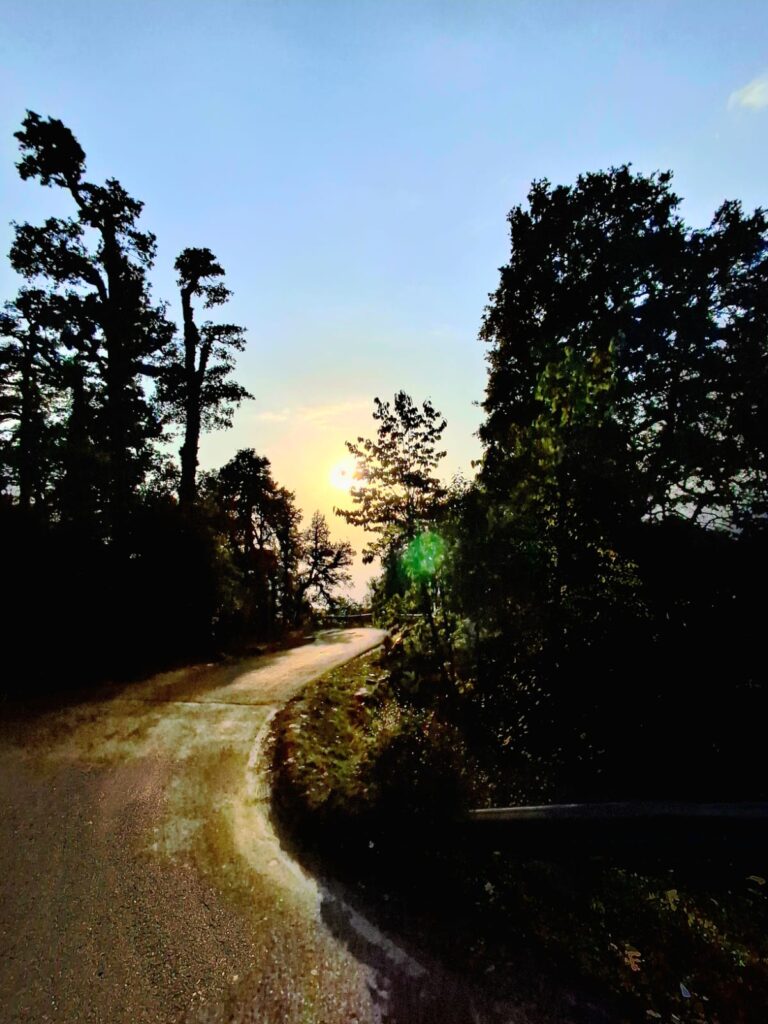
Between December and February, Chopta becomes a different place entirely. The transformation is not gradual — one snowfall and the entire landscape rearranges itself into something quieter, slower, and more demanding.
The roads can close after heavy snowfall, sometimes for a day or two at a time. The trek to Tungnath, when snow is deep, requires more effort and better footwear than most people anticipate. Temperatures at night regularly fall below -10°C. Power cuts are frequent. Hot water is aspirational. And yet winter is consistently what people mean when they say Chopta changed something in them.
There's a specific quality to a Himalayan morning under fresh snowfall. The silence after a night of snow is different from ordinary silence — thicker, more deliberate. The forest looks altered. The mountains, when they appear between the clouds, seem closer. Without the summer visitors, the place contracts to its essentials: a few camps, a trail, the cold, the sky.
If you're planning a Chopta trip specifically for snowfall, January is the most reliable month — deepest snow, fewest people, most atmospheric. Come with proper gear, a flexible schedule, and the acceptance that plans may change based on road conditions.
Winter Packing Essentials
• Waterproof Boots Or Gaiters For Deep Snow
• Balaclava Or Neck Warmer
• Powerbank (Keep In Sleeping Bag Overnight)
• Fleece Gloves Plus Waterproof Outer Gloves
• Insulated Water Bottle (Standard Bottles Freeze)
• Cash For 3–4 Days Minimum (ATMs Are Far)
Accommodation In Chopta
Chopta's accommodation is overwhelmingly camp-based, which is part of its character. Don't expect hotel-style amenities — what you get instead is proximity to the forest, good bedding, basic meals, and the particular satisfaction of sleeping somewhere that feels genuinely remote.
Tent Camps
Sleeping tents with foam mattresses and thick blankets, a common dining area with a bonfire or heater, and basic toilet facilities. In winter, the better camps add electric blankets and sleeping bags rated for sub-zero temperatures.
Swiss Tents & Cottages
More insulation, sometimes attached washrooms, and better bedding. Worth the upgrade during colder months when tent quality and heating matter considerably.
Domes & Boutique Camps
Proper beds, heaters, and panoramic mountain views. Some premium properties feature transparent roofing panels for stargazing. Availability is limited, especially during snowfall season.
GMVN Guesthouse
Clean, government-run, and reasonably priced. A dependable option for travellers who prefer rooms over camps and want straightforward accommodation.
A Few Things Worth Knowing Regardless Of Where You Stay: Electricity In Chopta Is Limited And Can Cut Out During Bad Weather. Hot Water Is Often Available Only For Limited Hours. Mobile Network Coverage Is Unpredictable. This Is Not A Place That Rewards The Expectation Of Comfort — It Rewards The Willingness To Adapt.
What To Do In Chopta
Tungnath Temple
At 3,680 m, Tungnath is the highest Shiva temple in the world — a stone structure that has stood for more than a thousand years. Located around 3.5 km from Chopta, it is one of the most accessible high-altitude temples in India. The shrine remains closed during winter, when the deity is moved to Ukhimath for the season.
The Chandrashila Sunrise Trek
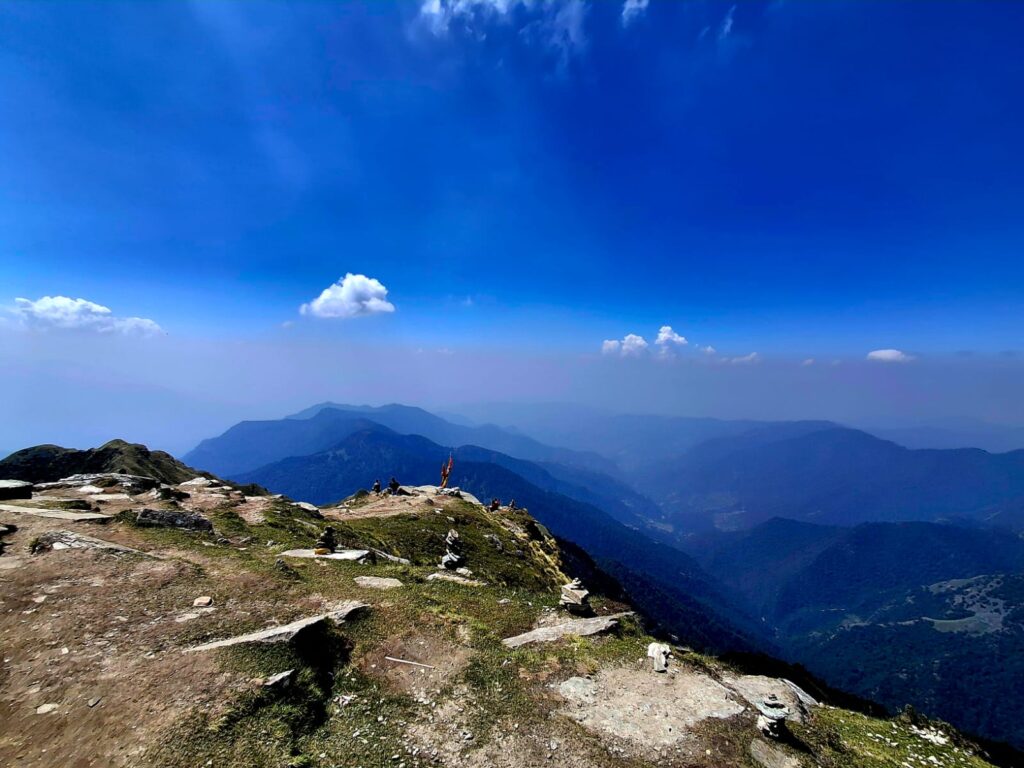
Continuing beyond Tungnath leads to the Chandrashila summit at 3,690 m. The panoramic view includes Nanda Devi, Trishul, Kedardome, Chaukhamba, and dozens of Himalayan peaks on a clear day. We've covered the complete route, budget, difficulty, and planning details in our Chandrashila Trek Guide.
Forest Walks
The forests surrounding Chopta are part of the Kedarnath Wildlife Sanctuary. Even a short morning walk reveals dense oak, rhododendron, and pine forests, often wrapped in mist. Many visitors discover that these quiet walks become as memorable as the trek itself.
Birdwatching
Chopta is one of Uttarakhand's best birdwatching destinations. The Himalayan Monal, the state bird of Uttarakhand, can often be spotted alongside thrushes, woodpeckers, and birds of prey soaring above the meadows.
Deoria Tal Day Trip
Around 20 km from Chopta, Deoria Tal is one of the most photogenic lakes in the Garhwal Himalayas. Early mornings often reveal reflections of Chaukhamba Peak mirrored on still water. The trek begins from Sari Village and makes a perfect half-day excursion from Chopta. We'll be covering Deoria Tal in detail in a dedicated guide soon.
Stargazing
At nearly 2,700 m above sea level and far from major cities, Chopta offers exceptionally dark skies. On clear nights between autumn and spring, the Milky Way becomes visible to the naked eye.
Bonfires
Most camps organise evening bonfires where travellers gather after a day on the trails. Simple food, hot chai, mountain stories, and clear skies often become some of the most memorable moments of a Chopta trip.
Network, ATM & Electricity
What To Pack For Chopta
Most packing guides for Himalayan trips are generic enough to be useless. Here's what actually matters for Chopta specifically.
- Trekking Shoes With Ankle Support
- Sunscreen SPF 50+ (High UV At Altitude)
- Powerbank (Minimum 10,000 mAh)
- Basic First-Aid Kit With ORS & Medicines
- Offline Maps Downloaded Before Arrival
- Warm Mid-Layer And Windproof Outer Layer
- Headlamp With Fresh Batteries
- Water Bottle Or Hydration Pack
- Cash (ATM Access Is Limited)
- Personal ID & Emergency Contacts
- Thermal Base Layer (Not Cotton)
- Waterproof Boots Or Gaiters
- Balaclava Or Neck Warmer
- Spare Woollen Socks
- Microspikes (Useful After Fresh Snowfall)
- Insulated Down Jacket For Sub-Zero Temperatures
- Fleece Gloves Plus Waterproof Outer Gloves
- Insulated Water Bottle
- Powerbank Kept Warm At Night
- Lip Balm & Moisturiser For Dry Mountain Air
Suggested Itinerary
Two nights and three days is the ideal first-visit structure — enough time for the Chandrashila trek, a Deoria Tal day trip, and a proper camp evening without rushing.
Rishikesh To Chopta
Depart Rishikesh early in the morning (7–8 AM). Drive via Devprayag, Rudraprayag, and Ukhimath. Refuel and withdraw cash at Ukhimath before continuing. Arrive in Chopta by late afternoon, settle into camp, take a short walk through the meadows, and enjoy an early night.
Chandrashila Sunrise
Start around 4 AM for the Chandrashila Trek. Reach Tungnath around sunrise and continue to the summit for panoramic Himalayan views. Return to camp by late morning. Spend the afternoon resting or exploring nearby forest trails. End the day with stargazing from the meadow if the skies are clear.
Deoria Tal & Return
Take an early morning trip to Deoria Tal. The reflections of Chaukhamba Peak are often at their best during the first hours of the day. Return by noon, have lunch, and begin the drive back towards Rishikesh or Haridwar.
Frequently Asked Questions
Everything most travellers ask before heading to Chopta — answered honestly.
Yes — and genuinely so. Chopta holds its own as a destination even without the summit. The Tungnath trail alone (stopping at the temple rather than continuing to Chandrashila) is a satisfying half-day walk. Add a day trip to Deoria Tal, an evening bonfire at camp, and a clear night of stargazing, and you have a full trip. That said, the Chandrashila Trek is one of the best short treks in Uttarakhand and takes just one day — most visitors find it worth doing.
Yes. Chopta receives significant snowfall from late November through February, with January typically being the heaviest month. The entire landscape — meadows, forest, trail — transforms completely under snow. Roads can block after heavy falls and may remain closed for a day or two. January is the most reliable window for deep snow; December and February offer snowfall with marginally more stable road conditions.
Two nights and three days is the ideal first-visit structure — enough time for the Chandrashila trek, a Deoria Tal day trip, and a relaxed camp evening without rushing. One night is workable if you're short on time, but you'll be rushing. Three or four nights is genuinely comfortable if slow travel is the point.
Yes. Chopta is one of the safer destinations for solo travel in the Garhwal Himalayas. The trail to Tungnath and Chandrashila is well-defined and sees regular foot traffic even in winter. Most camps are small and social — it is easy to find other trekkers to walk up with. Standard mountain precautions apply: tell your camp when you are leaving, do not start the trek too late, and carry a fully charged powerbank.
Jio tends to have marginally better coverage than Airtel in the Chopta area, but neither is reliable. Expect 1–2 bars in the meadow and no signal at all on the upper trails. Save offline maps before you leave Ukhimath, share your itinerary with someone, and do not plan to be reachable during your stay. That is not a limitation — it is most of the point.
No. There are no ATMs in Chopta. The nearest reliable ATM is in Ukhimath, approximately 25–30 km away. Withdraw enough cash before you arrive — ₹2,000 to ₹3,000 per person is a reasonable buffer for a 2–3 night stay covering accommodation, meals, and the trek.
Roads can close after heavy snowfall, sometimes for 24–48 hours. The stretch from Ukhimath to Chopta is most vulnerable. BRO (Border Roads Organisation) clears the road but it takes time. Come with a flexible schedule in January and February — the possibility of being snowed in for a night or two is real, and worth factoring into your plans.
Yes — with reasonable fitness. The trail from Chopta to Tungnath is 3.5 km and manageable for most people who walk regularly. The extension to Chandrashila summit adds another 1.5 km and gains significant elevation. In summer and autumn it is a beginner-friendly trek. In winter, snow depth and cold add difficulty — microspikes or traction devices are recommended. Full route details, difficulty rating, and cost breakdown are in our Chandrashila Trek Guide.
There are no restaurants in Chopta in the conventional sense. Most camps serve simple meals — dal, rice, roti, sabzi, omelettes, and chai — included or available at the camp. A few roadside dhabas operate in the warmer months near the trailhead. Expect hearty, honest mountain food rather than a menu. It is more than enough.
In summer and autumn, yes. The forest walks and Tungnath trail (without the full summit push) are suitable for children who are comfortable walking on uneven terrain. In winter, the cold, road uncertainty, and lack of facilities make it less suitable for young children. Accommodation is camp-based with basic amenities — manage expectations accordingly.
What Chopta Actually Gives You
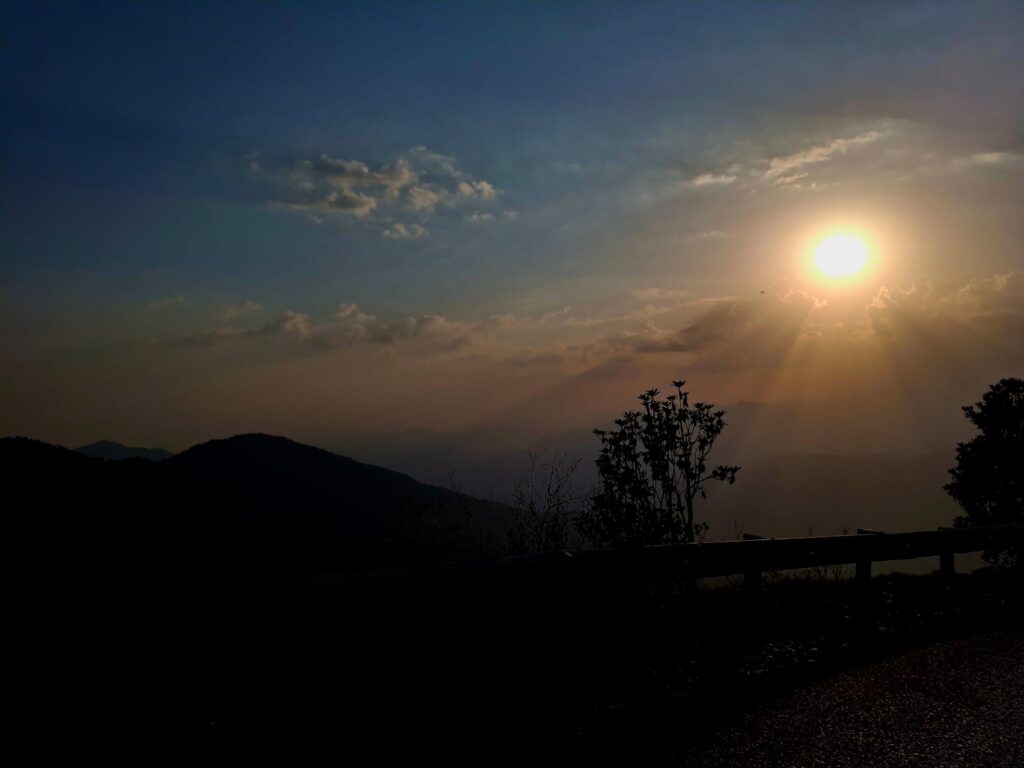
There's a particular quality to the last hour before sunrise at 2,700 m. The camp is still dark and the forest is very quiet. You're cold in the way that's uncomfortable but not unpleasant, standing outside your tent watching the skyline shift from black to the colour of old bruises. You can hear the wind working through the pine canopy somewhere above. In the distance, just barely, the outline of the Himalayan ridgeline resolves itself against the sky like a memory surfacing slowly.
Chopta does this to you. Not with drama, not with spectacle — just with time and altitude and the gradual removal of everything unnecessary. The trek is real and worth doing. The summit is worth every step. But the thing you carry home from Chopta isn't always the summit view.
Sometimes it's simpler: the smell of bonfire smoke in cold air, the sound of a camp waking up in the dark, the way the mountains appeared out of nowhere as the clouds cleared, and how, for a moment, nothing else seemed particularly important.
That's Chopta. And in a world of increasingly noisy travel, it remains, somehow, quietly its own.