Haridwar Travel Guide 2025

WHERE THE
GANGA
MEETS THE PLAINS

A City Of Fire And Water, Devotion
And Disorder — Receiving Pilgrims,
Wanderers And The Curious For
More Than Two Thousand Years.
Uttarakhand · India
Updated 2025
15 Min Read
3,800 Words
Best Time
Oct – Feb
Duration
2 – 3 Days
Budget / Day
From ₹800
Nearest Airport
Dehradun · 35 Km
Scroll
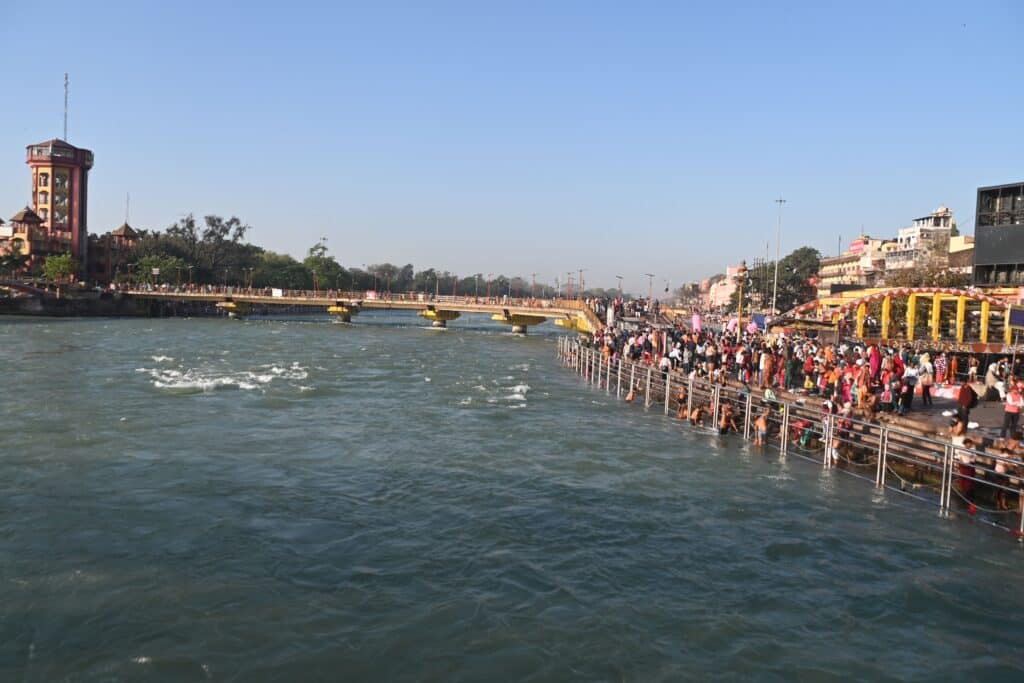
A vibrant scene of people gathered at the riverbank in Haridwar during a lively festival.
Har Ki Pauri is the spiritual heart of Haridwar and the city's most iconic landmark.
The City

A Place Where The
River Remembers
Everything

Long Before The Sun Clears The Shivalik Hills,
Haridwar Is Already Awake.

Bells Ring From Temple Towers. The Smell Of Marigolds, Incense, And Cold River Water Drifts Through Narrow Lanes. Down At The Ghats, Pilgrims Are Already Standing Chest-Deep In The Ganga — Eyes Closed, Palms Open To The Current.

Haridwar — One Of The Seven Sacred Cities Of Hinduism — Sits At A Unique Geographic And Spiritual Threshold. This Is Where The Ganga Descends From The Mountains And Spreads Across The Northern Plains For The First Time. For Centuries, It Has Been One Of The Most Important Pilgrimage Destinations On Earth. Today It Receives More Than Ten Million Visitors Each Year — From Devout Hindus Completing A Lifelong Journey To Photographers Hunting The Perfect Aarti Shot, From Yoga Seekers And Backpackers To Families Observing Ancestral Rituals At The River's Edge.

What Makes Haridwar Different From Other Sacred Cities Is The Energy. It Is Not Quiet Or Contemplative. It Is Full, Loud, And Alive In A Way That Is Difficult To Prepare For. The Ghats Are Crowded From Dawn. Temple Queues Stretch Around Corners. Priests Chant, Vendors Call Out, And The Bells Never Quite Stop.

Yet Somehow, In The Middle Of All This, There Are Moments Of Extraordinary Stillness — A Lamp Floating Downstream At Dusk, A Face Tilted Toward The Evening Sky At Aarti Time, The River Doing What It Has Always Done.

"Haridwar Is Not Somewhere You Simply Visit. It Is Somewhere You Arrive — And Then Recalibrate."

This Guide Is For Everyone Planning Time In Haridwar — Whether You Have A Single Afternoon Or A Full Week. It Covers The Places Worth Visiting, The Experiences Worth Prioritising, The Food Worth Eating, And The Practical Details That Make The Difference Between A Smooth Trip And A Frustrating One.

TravelCoda Note

If Rishikesh Is Where The Ganga Slows Time Down, Haridwar Is Where Its Story Began. The Two Cities Are 24 Km Apart — And Most Travellers Visit Both.

✦ ✦ ✦
At A Glance

Quick Overview

Haridwar · Uttarakhand · India
State
Uttarakhand, India
District
Haridwar
Elevation
314 Metres (1,030 Ft)
Famous For
Ganga Aarti, Har Ki Pauri, Kumbh Mela, Sacred Ghats, Ancient Temples
Ideal Duration
2 – 3 Days (Combine With Rishikesh For 4 – 5 Days)
Best Time
October – February · March – May (Spring)
Nearest Airport
Jolly Grant, Dehradun — 35 Km
Railway Station
Haridwar Junction (HW) — Direct Trains From Delhi, Mumbai, Kolkata
Daily Budget
Backpacker ₹800 – ₹1,200
Mid-Range ₹2,500 – ₹4,000
Comfortable ₹6,000+
Best For
Pilgrims, Solo Travellers, Photographers, Families, Backpackers
💡

Pro Tip — Combine Haridwar With Rishikesh For A 4 – 5 Day Uttarakhand Trip. The Two Cities Are 24 Km Apart And Connected By Frequent Shared Autos.

✦ ✦ ✦
The Significance

Why Haridwar Deserves
More Than A Day

Most Travellers Treat Haridwar As An Overnight Stop.
That Is A Mistake.

The City Has A Texture That Takes Time To Read — The Rhythm Of Prayer And Commerce, The Weight Of History Sitting Lightly On Very Old Stone. Haridwar Rewards Those Who Linger.

Spiritually, Haridwar Is One Of Four Sites Where Drops Of The Nectar Of Immortality — Amrit — Are Said To Have Fallen During The Great Churning Of The Cosmic Ocean. This Is Why The Kumbh Mela, Held Here Every Twelve Years, Draws Tens Of Millions Of Pilgrims — One Of The Largest Human Assemblies On Earth. The Next Full Kumbh Mela In Haridwar Is Scheduled For 2033.

Beyond Its Religious Identity, Haridwar Is The Gateway To Uttarakhand's Himalayan Interior. Rishikesh Is 24 Kilometres Upstream. Beyond That Lie The Trekking Valleys Of Chopta And Kedarnath, The Confluence Town Of Devprayag, And The High Passes That Lead Toward Tibet. Haridwar Is Where Most Himalayan Journeys Begin — And Where Many Pilgrims Complete Them.

01
The Ganga Aarti

A Centuries-Old Devotional Fire Ceremony Performed Every Single Evening At Har Ki Pauri. Not A Show. Not A Performance. The Real Thing.

02
Sacred Ghats

Tiered Stone Steps Descending Into The Green Ganga, Lined With Temples And Shrines — The Most Sacred River Bathing Site In India.

03
Hilltop Temples

Mansa Devi And Chandi Devi — Two Ancient Shakti Temples On Opposite Hills, Connected By Ropeway With Panoramic Valley Views.

04
Gateway To The Himalayas

The Starting Point For Char Dham Yatra, Rishikesh, Chopta, Deoria Tal, And The Entire Garhwal Himalayan Circuit.

05
Kumbh Mela Legacy

One Of The Four Sacred Kumbh Sites — Hosting The Largest Human Gathering On Earth Every Twelve Years.

06
Living Tradition

Pilgrims, Priests, Sadhus, And Street Vendors — A Two-Thousand-Year-Old Way Of Life Still Fully Intact.

For Travellers Who Are Not Pilgrims, The City Offers Something Rarer: Direct, Unmediated Contact With One Of The World's Oldest Living Religious Traditions. The Aarti Ceremony Is Not Staged For Tourists. It Has Been Performed At This Ghat, In Essentially The Same Form, Every Evening For Centuries.

✦ ✦ ✦
When To Go

Best Time To
Visit Haridwar

Haridwar Can Be Visited Year-Round.
But The Experience Varies Considerably By Season.

Temperature, Crowd Levels, And The Rhythm Of Festival Life All Shift Across The Calendar. Here Is What Each Season Actually Feels Like — Crowds Included.

☀️
Summer
March – June

Temperatures Rise To 38 – 40°C By May. Crowds Are Moderate. Good For Temple Access Without Peak-Season Pressure. Start Days Early And Rest At Midday.

🌧️
Monsoon
July – September

Heavy Rainfall From July. The Ganga Rises Dramatically — Potentially Dangerous For Bathing. Fewer Visitors. Rich Green Landscape And An Atmospheric, Moody Mood.

Best Season
October – February

Cool And Clear, 5 – 20°C. Peak Festival Season Including Kartik Purnima. Sharp Light, Comfortable Walking Weather. The Best Overall Window To Visit.

Recommended
Our Recommendation

October To Early December Is The Sweet Spot — The Monsoon Has Cleared, The Light Is Clean, Festival Calendars Are Full, And The Cold Has Not Yet Made Early Mornings Uncomfortable. If The Kumbh Mela Is Not Your Goal, Avoid Late January To March In Major Pilgrimage Years When Crowds Become Extreme.

✦ ✦ ✦
Getting There

How To Reach
Haridwar

Well-Connected By Rail, Road, And Air —
Haridwar Is One Of The Easiest Himalayan
Gateway Cities To Reach From Across India.

From Delhi
3.5 – 5 Hrs
By Train
Dehradun Airport
35 Km
45 Min By Cab
From Rishikesh
24 Km
45 Min By Road
From Dehradun
55 Km
1 Hr By Road
✈️ By Air

The Closest Airport Is Jolly Grant Airport In Dehradun, Approximately 35 Kilometres From Haridwar City Centre. It Is Well-Connected With Delhi, Mumbai, And Bangalore Via IndiGo And Air India.

From The Airport, Taxis Take Around 45 Minutes To An Hour Depending On Traffic. Pre-Booked Cab Fare Is Typically ₹600 – ₹900. The Flight From Delhi Takes Just 40 Minutes.

Pro Tip

Book A Cab In Advance Via Ola Or Your Hotel. Airport Queue Taxis Often Charge Higher Rates. Factor In Airport Transit Time When Planning Connections.

🚆 By Train

Haridwar Junction (Station Code: HW) Is One Of The Best-Connected Stations In Uttarakhand. Multiple Daily Trains Operate From New Delhi, Including The Shatabdi Express (3.5 Hours) And Dehradun Express. From Mumbai And Kolkata, Overnight Trains Connect In 14 – 18 Hours.

The Station Is Centrally Located — Most Guesthouses And Ashrams Are Within 2 Kilometres Of The Platform. Train Travel Is The Preferred Option For Most Travellers From Delhi.

Pro Tip

Book Via IRCTC Well In Advance — Especially October To February When Seats Fill Quickly. The Jan Shatabdi Express From Delhi Is A Comfortable Daytime Option That Arrives In Good Time For The Evening Aarti.

🛣️ By Road

Haridwar Sits On National Highway 334B And Is Well-Connected By Road. From Delhi, The Drive Takes Approximately 5 – 6 Hours Via The NH-58 Corridor Through Meerut And Muzaffarnagar.

Volvo Buses Operated By UPSRTC And Private Operators Depart From Delhi's Kashmiri Gate ISBT Regularly, With Journey Times Of 5 – 7 Hours. Fares Range From ₹450 – ₹900.

From Rishikesh, Shared Autos And Buses Run Frequently — The Journey Takes 45 Minutes And Costs ₹30 – ₹60 Per Person. From Dehradun, The Drive Is 55 Km And Takes Around One Hour.

Pro Tip

If Driving From Delhi, Leave Before 6 AM To Clear The Meerut Bypass Before Traffic Builds. Parking In Haridwar City Centre Is Difficult — Use Designated Parking Near The Station And Take An Auto In.

🚆 Delhi → Haridwar: 3.5 Hrs ✈️ Dehradun Airport: 35 Km 🛣️ Rishikesh: 24 Km · 45 Min 🚌 Delhi ISBT Bus: 5 – 7 Hrs 🛣️ Dehradun: 55 Km · 1 Hr
Places to visit in Haridwar — Elementor Widget
The Ghats & Temples

Places To Visit in Haridwar

From the sacred steps of Har Ki Pauri to the quiet hilltop shrines — five sites that give the city its character.

01 Har Ki Pauri Sacred Ghat
This is the soul of Haridwar. Har Ki Pauri — meaning "Steps of God" — is the most sacred ghat on the Ganga, believed to be the precise point where the river exits the mountains and enters the plains. A footprint of Vishnu is enshrined here within the Haridwar Brahma Kund, and bathing at this spot is considered one of the most spiritually potent acts a Hindu can undertake.
The ghat is a masterpiece of religious architecture — tiered stone steps descending into the green water, lined with temples and shrines, with chains installed so bathers can hold on against the current. At full capacity, tens of thousands of pilgrims can be standing on these steps simultaneously.
Travel Tip Remove shoes before approaching the ghat area. Leave valuables secured — crowds are thick. Arrive 30 minutes before sunset for the best Aarti viewing positions.
02 Mansa Devi Temple Hilltop Shrine
Perched on Bilwa Parvat above the city, Mansa Devi is one of the Siddha Peethas — sites of particular spiritual power in the Hindu tradition. The goddess Mansa Devi, a form of Shakti, is believed to fulfil wishes. The temple is visited by millions annually, many tying a thread on a sacred tree in the courtyard to symbolise a prayer, returning to untie it when the wish is granted.
A ropeway connects the base station near Har Ki Pauri with the hilltop temple, providing panoramic views over Haridwar and the Ganga below. The cable car journey takes around 5 minutes each way. You can also walk up via a steep forest path — roughly 1.5 kilometres.
Best Time To Visit Arrive early morning (6–8 AM) to avoid queues. The ropeway opens at 7 AM. The view at sunrise, with mist over the valley and the Ganga catching the first light, is exceptional.
03 Chandi Devi Temple Hilltop Shrine
Situated on Neel Parvat across the river, Chandi Devi is the second of Haridwar's major hilltop temples. The idol is said to have been installed by Adi Shankaracharya in the 8th century, making it one of the oldest active shrines in the region. The temple is dedicated to Chandi — a fierce, protective form of the goddess Durga.
Like Mansa Devi, Chandi Devi is accessible by ropeway from Chandi Ghat. Crossing both temples in a single day — known as the Panch Tirth circuit — is considered deeply auspicious. Allow at least half a day to visit both comfortably.
Travel Tip The ropeway ticket covers one-way or return journeys. On clear days, the Himalayan foothills are visible from the temple platform — bring a camera.
04 Bharat Mata Mandir Unique Temple
Unusual in the Indian temple landscape, Bharat Mata Mandir is dedicated not to a deity but to India itself. The eight-storey structure houses galleries across its floors — each dedicated to a theme: freedom fighters, saints and scholars, Himalayan peaks, oceans, and beyond. The ground floor features a relief map of India carved in marble.
Inaugurated by Indira Gandhi in 1983 and managed by Shantikunj, this is a thought-provoking stop for visitors curious about the intersection of nationalism, spirituality, and culture in modern India.
05 Shantikunj & Sapt Rishi Ashram Ashrams
Shantikunj, located in the quieter upper reaches of Haridwar, is the headquarters of the All World Gayatri Pariwar — a spiritual and social reform movement. The campus is green, ordered, and serene — a striking contrast to the noise of the main ghats. Visitors can attend morning and evening prayers, explore the gardens, and learn about the Gayatri tradition.
Sapt Rishi Ashram sits at the point where the Ganga divides into seven channels, said to be where seven great sages — the Saptarishis — once meditated. Sitting by the river here, watching the water split around its islands, is one of the more meditative experiences the city offers.
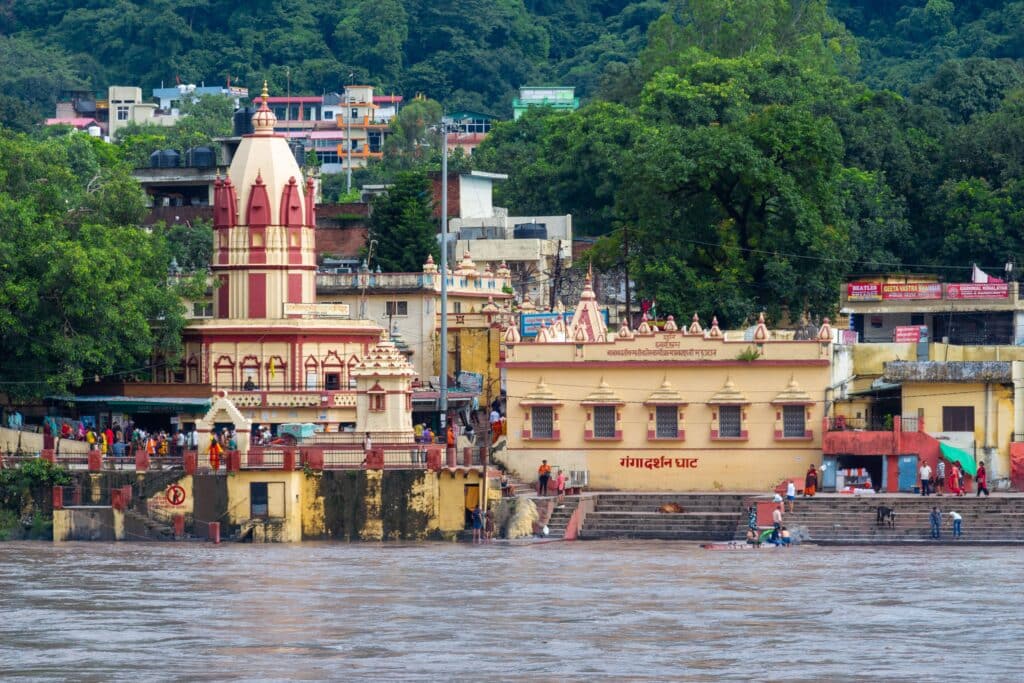
Vibrant scene at Ganga Ghat, Rishikesh with temple and riverfront in view.
The ghats of Har Ki Pauri attract pilgrims and visitors throughout the year.
Fire on the River — Ganga Aarti — Elementor Widget
The Aarti

Fire on the River: The Ganga Aarti at Dusk
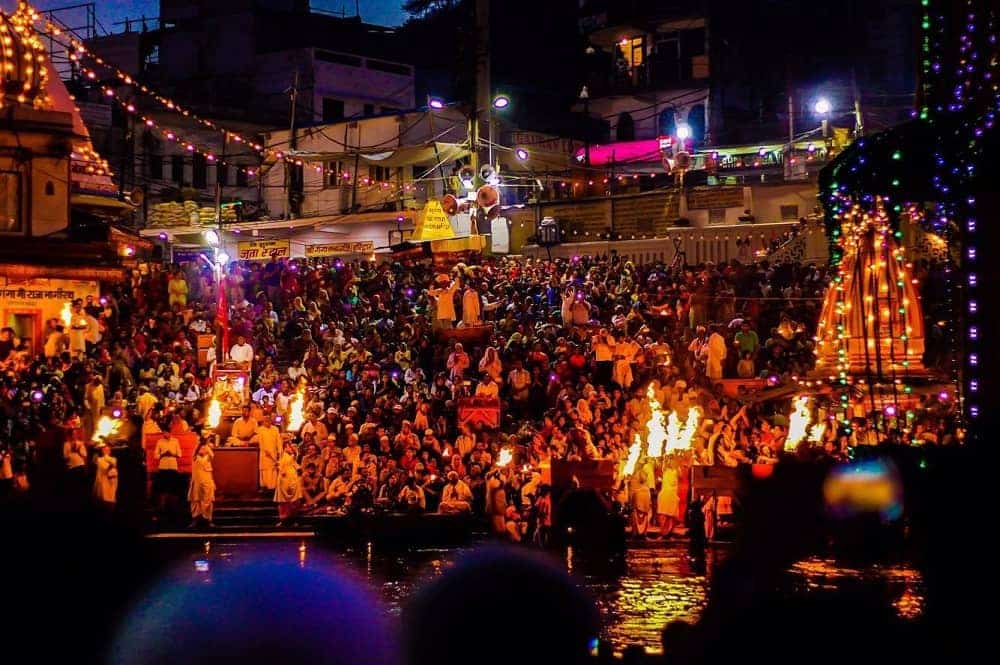
The aarti at Har Ki Pauri begins before the sun fully sets. You hear it before you see it.
Drums build a low, insistent pulse. Then conch shells sound in long, resonant blasts. Priests in saffron robes take their positions on the stone platforms at the river's edge — young men with precise movements, going through a ceremony they have practised since childhood. Behind them, the temple towers of Har Ki Pauri glow orange and gold under floodlights. In front of them, the Ganga flows black and silver in the fading light.
The lamps — brass tiered structures called deepams, holding dozens of wicks soaked in ghee — are lit. The priests begin to move in a choreographed arc, swinging the lamps in wide circles in front of the river. The flame traces rings of light in the air. The crowd, which has filled every inch of ghat space and spilled onto the bridges above, falls into a collective attentiveness that is different from ordinary silence. People are watching and also praying and also simply being here, in this place, at this hour, as people have done for centuries.
The ceremony lasts around 45 minutes. Diyas — small clay lamps filled with flower petals and a floating flame — are set on the water at the end. They drift downstream in clusters of light, navigating the current, growing smaller and finally disappearing around the first bend. Watching them go is, for many people, the emotional peak of a visit to Haridwar.
"The diyas drift downstream and the crowd gradually stills. For a moment, everyone is watching the same light moving away across the water."
Evening aarti is held daily at approximately 6 PM in winter and 7 PM in summer — check current timings upon arrival, as they shift with sunset. Morning aarti is held at sunrise. The evening ceremony draws far larger crowds. For photography, a telephoto lens is useful, as the best positions on the ghat fill early. The bridges flanking the main ghat provide an elevated view and are often less crowded than the steps below.

Evening Aarti
Sunset Daily
~6 PM winter · ~7 PM summer
Morning Aarti
Sunrise Daily
Less crowded, quieter energy
Best Position
Arrive 40 Min Early
Elevated bridge for photography
ganga aarti in haridwar
The evening Ganga Aarti at Har Ki Pauri is the most iconic spiritual experience in Haridwar.
Experiences & Food — Elementor Widget
Experiences

How to Spend Your Time Well

  • Attend both morning and evening Ganga Aarti at Har Ki Pauri — the two ceremonies have distinctly different moods.
  • Walk the circuit between the main ghats at dawn, when the city is quieter and the river light is extraordinary.
  • Take the ropeway to Mansa Devi and Chandi Devi temples — visit both in a single half-day circuit.
  • Explore the local market lanes between the Moti Bazaar and Railway Road — excellent for purchasing religious items, brass work, and ayurvedic products.
  • Try street food along the ghats, particularly the kachori-sabzi stalls that operate from early morning.
  • Visit Shantikunj for a contrast to the commercial energy of central Haridwar — calm campus, good for a couple of reflective hours.
  • Take a day trip to Rishikesh — the yoga capital is 24 kilometres north and makes an easy half-day excursion.
  • Visit Rajaji National Park for a half-day wildlife drive — elephant and leopard sightings are possible in the dry season.
  • Watch the floating lamp ceremony after aarti ends — remain at the ghat edge as diyas are released on the water.

Food & Culture

What to Eat in Haridwar

Haridwar is a strictly vegetarian city — no meat or eggs are sold anywhere within the city limits, a rule enforced by municipal ordinance and religious convention. What the food scene lacks in diversity, it compensates for with depth of flavour. North Indian vegetarian street food here is some of the most satisfying in the country.
Kachori Sabzi
The breakfast of Haridwar. Crisp, puffed kachoris served with spiced potato curry. Available from dawn at stalls near the ghats. ₹40–60 a plate.
Aloo Puri
Deep-fried puri bread with tangy potato curry. A staple across the city's dhaba restaurants, especially satisfying on cold mornings.
Chaat
Gol gappe, dahi papdi, and aloo tikki appear across the evening markets. The chaat at Moti Bazaar is particularly well-regarded by locals.
Jalebi
Freshly fried spirals of fermented batter, soaked in sugar syrup. Best eaten hot, with rabri (thickened sweetened milk) on the side.
Lassi
The thick, sweet lassi sold in clay cups near the ghats is outstanding. Avoid plastic-bottled versions and look for the hand-churned clay-pot sellers.
Milk & Sweets
Pedha, barfi, and rabri from the sweet shops around Upper Road. Haridwar's dairy-based sweets are famous across Uttarakhand.
The main food streets are concentrated around Railway Road, Upper Road, and the Moti Bazaar area. For sit-down meals, dhabas near the main ghat serve thalis for ₹80–150. Prices are reasonable across the board — Haridwar remains one of the better-value cities in northern India for street food.
Stay, Budget & Itinerary — Elementor Widget
Where to Stay

Accommodation for Every Kind of Traveller

Haridwar has an unusually wide accommodation spectrum — from ₹300-a-night dormitories and spartan ashram cells to mid-range hotels with river views and a small collection of comfortable boutique properties. The choice of where you stay significantly affects your experience of the city.
Budget Hotels
₹700 – ₹1,800 / Night
Clean, functional rooms near the railway station or ghat areas. Hotel Sagar Ganga, Hotel Teerth, and Hotel Suruchi are reliable options. Good for families and couples on a careful budget.
Mid-Range
₹2,000 – ₹5,000 / Night
Better amenities, AC rooms, and often river views. Har Ki Pauri and the upper ghat areas have several good mid-range properties. Ideal for those wanting comfort without premium pricing.
Luxury & Resorts
₹6,000 – ₹15,000+ / Night
A small number of resort-style properties operate on the outskirts of Haridwar, including properties near the Rajaji forest edge. Best for travellers who want nature, spa access, and quiet after a day at the ghats.
Location Note: Properties near Har Ki Pauri offer the most immersive experience but can be noisy, particularly during festival periods. If sleep quality matters, consider staying slightly further from the main ghats — 15 minutes by auto-rickshaw is often enough to restore quiet.

Planning Your Trip

A Realistic Budget for Haridwar

Traveller TypeAccommodationFoodTransportActivitiesDaily Total
Backpacker₹400–700 (dorm/ashram)₹200–350 (street food)₹100–200 (auto/walk)₹100–200 (ropeway)₹800–1,200
Mid-Range₹1,500–3,000₹500–800 (dhabas)₹300–500₹300–500₹2,500–4,000
Comfortable₹4,000–8,000₹1,000–1,500₹600–1,000 (cab)₹500–1,000₹6,000–11,500
Most activities in Haridwar — attending the aarti, walking the ghats, visiting temples — are free or involve a very small donation. The ropeway to Mansa Devi is ₹195 return per person. Rajaji National Park entry is ₹200 for Indian nationals, ₹400 for foreign visitors. Budgeting ₹500–800 per day for a backpacker trip is entirely feasible.

The Itinerary

Two Days in Haridwar

Day One
The River, the Temples, the Evening Fire
5:30 AM
Morning Aarti at Har Ki Pauri
Wake early and walk to the ghat for sunrise aarti. The pre-dawn energy is different from the evening — fewer crowds, quieter priests, the Ganga catching the first pale light. A powerful way to begin.
7:30 AM
Breakfast on the Ghats
Kachori sabzi from the stalls near the main ghat entrance. Eat by the water if possible. ₹50 will feed you well.
9:00 AM
Mansa Devi Temple by Ropeway
Take the cable car from the base station. The hilltop offers panoramic views of the city and the river below. Allow 90 minutes including queuing time.
11:30 AM
Chandi Devi Temple
Cross town to Chandi Ghat and take the second ropeway. Combined, these two hilltop temples form the Panch Tirth circuit — spiritually significant and logistically satisfying.
2:00 PM
Lunch and Rest
Thali at a Railway Road dhaba. Rest during the hot midday hours.
4:00 PM
Market Exploration — Moti Bazaar
Browse the market lanes for rudraksha beads, brass puja items, saffron, herbal products, and local sweets. The market is most alive between 4 and 7 PM.
6:00 PM
Evening Ganga Aarti
Position yourself at the ghat 40 minutes early. Stay until the diyas are released on the water. This is the centrepiece experience of any Haridwar visit.
Day Two
Ashrams, Quiet Ghats, and Day Trips
7:00 AM
Sapt Rishi Ashram
Visit the confluence point where the Ganga divides into seven channels. Quiet, reflective, and genuinely beautiful. A 15-minute auto-rickshaw ride from the main ghat area.
9:30 AM
Shantikunj Campus
Walk the grounds and attend morning prayers if timed correctly. The Bharat Mata Mandir is a 5-minute walk from Shantikunj — combine both in a single morning visit.
12:00 PM
Day Trip to Rishikesh
The yoga capital is 24 kilometres north. Shared autos and buses run frequently. Walk the Ram Jhula suspension bridge, visit Triveni Ghat, explore the ashrams along the river. Return to Haridwar by evening for the aarti.
6:30 PM
Final Evening at Har Ki Pauri
Return for a last evening at the ghat. After two days, the ceremony will feel familiar — and somehow, more meaningful for it.
Beyond Haridwar to Closing — Elementor Widget
Beyond Haridwar

Extending Your Journey into Uttarakhand

Haridwar is an ideal base for exploring a wider region that rewards those with time and curiosity. The mountains to the north hold a remarkable range of experiences — sacred river confluences, ancient temples, high-altitude meadows, and Himalayan trekking circuits that are among the finest in India.
24 Km North
Yoga, white-water rafting, suspension bridges, and ashrams. Best combined as a day trip or overnight extension. Read our Rishikesh Travel Guide →
75 Km North
Devprayag
Where the Alaknanda and Bhagirathi rivers meet to form the Ganga. A profound, quiet town at a sacred confluence. See our Devprayag Travel Guide.
230 Km North
The "Mini Switzerland of Uttarakhand." A base for the famous Chandrashila Trek and access to Tungnath, the highest Shiva temple in the world. Read our Chopta Travel Guide →
225 Km North
A high-altitude lake reflecting the Chaukhamba peaks on clear mornings — one of the most photogenic spots in Uttarakhand. Read our Deoria Tal Trek Guide →
20 Km East
Rajaji National Park
A 820 km² wildlife reserve harbouring Asian elephants, leopards, and over 400 bird species. Half-day jeep safaris available from the Chilla range, close to Haridwar.

Practical Advice

Things Worth Knowing Before You Arrive

👗
Dress Respectfully
Cover shoulders and knees at temples and ghats. Lightweight cotton salwar kameez or linen works well and is available cheaply in the local markets.
👟
Shoes at the Ghats
Remove footwear before entering temple premises and approaching the main ghat area. Carry a small bag for shoes to avoid misplacement in crowds.
📷
Photography Etiquette
Photography is permitted at most sites but always ask before photographing individuals, especially pilgrims at the ghats. No photography inside some temple inner sanctums.
💊
River Bathing Safety
The Ganga current at Har Ki Pauri can be very strong. Use the safety chains installed in the water and do not wade beyond chest depth. Avoid during monsoon season.
⚠️
Avoiding Touts
Self-appointed "pujaris" near ghats may charge exorbitant rates for rituals. If you want to participate in a puja, ask your hotel for a genuine recommendation.
💧
Water & Food Safety
Carry a reusable bottle and refill at filtered water stations — widely available. Street food is generally safe from stalls with high turnover. Avoid anything sitting for hours.
A Note on Alcohol: Haridwar is a completely dry city. No alcohol is sold or permitted within city limits. If this is important to you, you can find alcohol legally in Rishikesh or Dehradun.

Frequently Asked Questions

Common Questions Answered

Is Haridwar worth visiting for non-religious travellers?
Absolutely. You do not need to be Hindu, or spiritual, or even particularly religious to find Haridwar absorbing. The Ganga Aarti is one of the most visually and emotionally powerful ceremonies in the world, regardless of personal belief. The ghats, temples, food, and sheer human energy of the city make it a genuinely compelling travel destination for anyone curious about India.
How many days are enough for Haridwar?
Two full days is the right amount for most travellers. Day one covers the main ghats, the hilltop temples, and the evening aarti. Day two allows for the quieter ashrams, a morning ghat walk, and a day trip to Rishikesh. Three days is comfortable if you want a slower pace or plan to visit Rajaji National Park. A single day is possible but you will feel the pressure of it.
What is the best time to visit Haridwar?
October to February is ideal — cool temperatures, clear skies, and the major festival calendar including Kartik Purnima and Makar Sankranti. March and April are pleasant but increasingly warm. Avoid the peak summer months of May and June unless you are comfortable with temperatures above 38°C. The monsoon season (July–September) is viable but comes with flooding risk at the ghats.
Is Haridwar safe?
Haridwar is generally safe for solo travellers, including women travelling alone. The main ghats and market areas are busy and well-populated at all hours. Standard precautions apply — watch your belongings in crowds, avoid poorly lit areas late at night, and be cautious of unsolicited approaches from strangers near the ghats. The city has a visible police presence at major sites.
Can I visit Haridwar and Rishikesh together?
Yes — and most travellers do. The two cities are 24 kilometres apart and connected by frequent shared autos, buses, and taxis. A typical itinerary combines two days in Haridwar with two days in Rishikesh. Some travellers base themselves in Rishikesh (which has more accommodation variety and a livelier café scene) and take day trips to Haridwar for the aarti.
What is Kumbh Mela, and should I plan around it?
Kumbh Mela is one of the largest religious gatherings in human history, held in Haridwar every twelve years (and a smaller Ardh Kumbh every six years). During the main bathing dates — known as Shahi Snans — tens of millions of pilgrims descend on the city simultaneously. It is an extraordinary, once-in-a-lifetime spectacle. However, logistics require very careful advance planning. The next full Kumbh Mela in Haridwar is in 2033.
Is alcohol available in Haridwar?
No. Haridwar is a dry city — alcohol is neither sold nor permitted anywhere within the city limits. The nearest places to purchase alcohol legally are Rishikesh and Dehradun. This rule is strictly enforced.
What is Haridwar most famous for?
The Ganga Aarti at Har Ki Pauri is the single most iconic experience the city offers. Beyond that, Haridwar is famous for being one of the seven holy cities of Hinduism, for the Kumbh Mela, for its ghats, for the hilltop temples of Mansa Devi and Chandi Devi, and as the gateway to the Char Dham pilgrimage circuit (Yamunotri, Gangotri, Kedarnath, and Badrinath).
Can I swim or bathe in the Ganga at Haridwar?
Bathing in the Ganga is central to the religious experience of Haridwar, and millions do so each year. Har Ki Pauri has safety chains installed to assist bathers against the current. The water at Haridwar is cleaner than at many downstream cities, though pollution levels have increased over the decades. Avoid bathing during the monsoon, when currents are dangerously strong and water levels are unpredictable.
How do I get from Haridwar to the Char Dham pilgrimage sites?
Haridwar is the traditional starting point for the Char Dham yatra. Most pilgrims take shared taxis or private vehicles from here to Rishikesh, and then continue north to the four shrines. Buses run directly from Haridwar bus stand to Barkot (for Yamunotri), Uttarkashi (for Gangotri), Sonprayag (for Kedarnath), and Joshimath (for Badrinath). Helicopter services to Kedarnath and Badrinath also operate from helipads near Haridwar during the pilgrimage season.

✦ ✦ ✦
Closing Thoughts

What Haridwar Gives You

Every city has a frequency. Haridwar's is ancient, insistent, and generous to those who pay attention.
Leave the city knowing that the Ganga Aarti will happen again tomorrow evening, as it has for centuries, whether you are there to watch it or not. That continuity — the fire on the water, the bells in the dark, the river doing what rivers do — is precisely what makes Haridwar worth the journey.
You may arrive as a traveller and leave as something less easy to name. You may arrive expecting spectacle and find instead something quieter: a sense that this river, and the people who love it, have been here longer than any problem you came carrying. That is not nothing. For many people, it turns out to be exactly everything.
Come in October when the light is right. Stay two nights. Wake before dawn on the first morning. Stand at the ghat as the city comes alive around you and the Ganga catches the first pale light of a new day. Then you will understand why Haridwar has been drawing people to its banks since before recorded history — and why it will continue to do so long after all of us have moved on.
For those planning to continue deeper into the mountains, our Chopta Travel Guide, Deoria Tal Trek Guide, and Chandrashila Trek Guide cover the best of Uttarakhand's high-altitude interior. The road north from Haridwar is long and consistently rewarding.
0 0 votes
Article Rating
Subscribe
Notify of
guest
0 Comments
Oldest
Newest Most Voted
Inline Feedbacks
View all comments
0
Would love your thoughts, please comment.x
()
x