
Uttarakhand · Rudraprayag · Garhwal Himalayas
Deoria Tal Trek Guide:
Route, Camping, Budget & Best Time
A short Himalayan trek to one of Uttarakhand's most beautiful reflection lakes.
THE LAKE
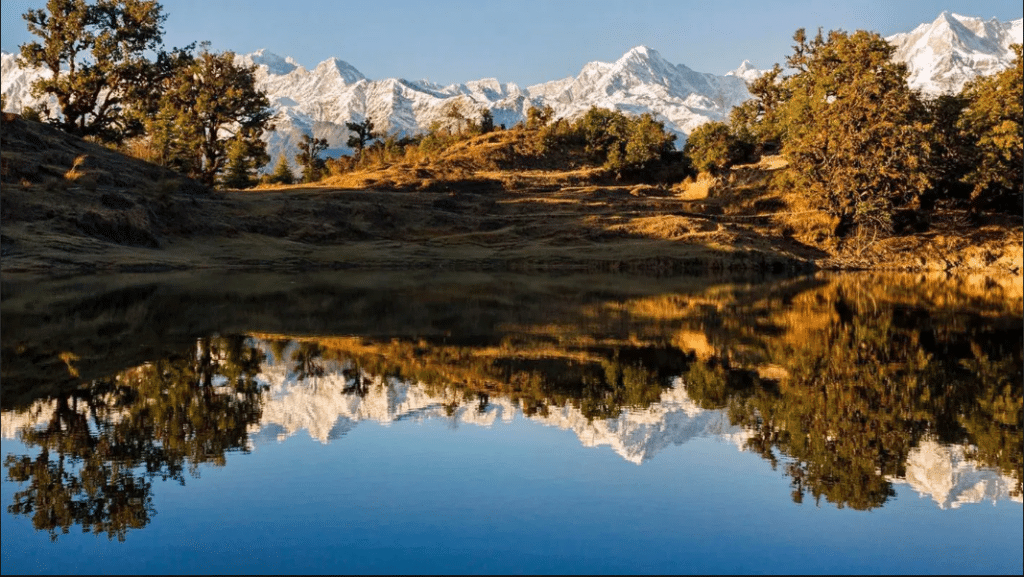
The Lake That Mirrors the Himalayas
There are places in the Himalayas that earn their reputation through difficulty — days of altitude gain, cold nights, and technical terrain. Deoria Tal is not one of those places. Its power works differently, and that’s precisely why it stays with people.
Tucked inside the Kedarnath Musk Deer Sanctuary at 2,438 metres, this high-altitude lake sits above Sari Village in Uttarakhand’s Rudraprayag district, ringed by dense oak and rhododendron forest. On a calm, clear morning — particularly in spring or the post-monsoon autumn — the Chaukhamba massif reflects almost perfectly on its surface. Four peaks, the tallest exceeding 7,000 metres, appearing twice at once: once in the sky and once in the water at your feet.
It’s a sight photographers have been returning for. But most people who visit say they remember the silence more than the view — the specific quality of stillness at 2,400 metres, before the day starts moving, when the lake looks less like water and more like a held breath.
The mythology runs deep here. Local belief holds that the Devas once bathed in these waters — which is where the name comes from. Sadhus have long identified the lake with Indra Sarovar of the Puranas. The forest, the altitude, and the stillness all conspire to make the place feel older than it looks.
At a Glance
Quick Overview
Location
Rudraprayag District, Uttarakhand
Altitude
2,438 m (7,999 ft)
Trek Distance
~2.5 km one way from Sari Village
Starting Point
Sari Village (~2,000 m)
Trek Duration
60–90 minutes (one way)
Difficulty
Easy to Moderate
Camping
Yes — regulated, ~100 m from lake
Best Time to Visit
Mar–May & Oct–Nov
Getting There
How to Reach Deoria Tal
The standard approach follows one of Uttarakhand's most travelled mountain corridors: Rishikesh → Rudraprayag → Ukhimath → Sari Village. From Sari, the trail begins. Rishikesh to Sari is roughly 190 km by road — about 7 to 8 hours depending on traffic and the season.
Most travellers heading this way spend a night in Rishikesh first. It's the natural staging point for the entire Garhwal circuit, and a good place to arrange onward transport, sort supplies, and rest before the drive into the hills. Our Rishikesh Travel Guide covers where to stay, what to eat, and how to plan the first two days of this kind of trip.
By Air
Jolly Grant Airport in Dehradun is the nearest airport, roughly 220 km from Sari Village. Taxis and shared cabs connect the airport to Rishikesh; from there, shared jeeps or private cabs run toward Ukhimath and Sari.
By Train
The closest major railway stations are Haridwar (230 km) and Rishikesh (210 km), both well connected to Delhi and other cities. From Rishikesh, the road to Ukhimath is the onward route — shared jeeps leave from the main bus stand.
By Road
Sari Village is the last motorable point before the trek begins. The road is fully paved and accessible to standard hatchbacks and sedans year-round. Local cabs and shared jeeps run between Ukhimath and Sari; the 12 km stretch takes around 25 minutes.
The Trail
The Trek from Sari Village
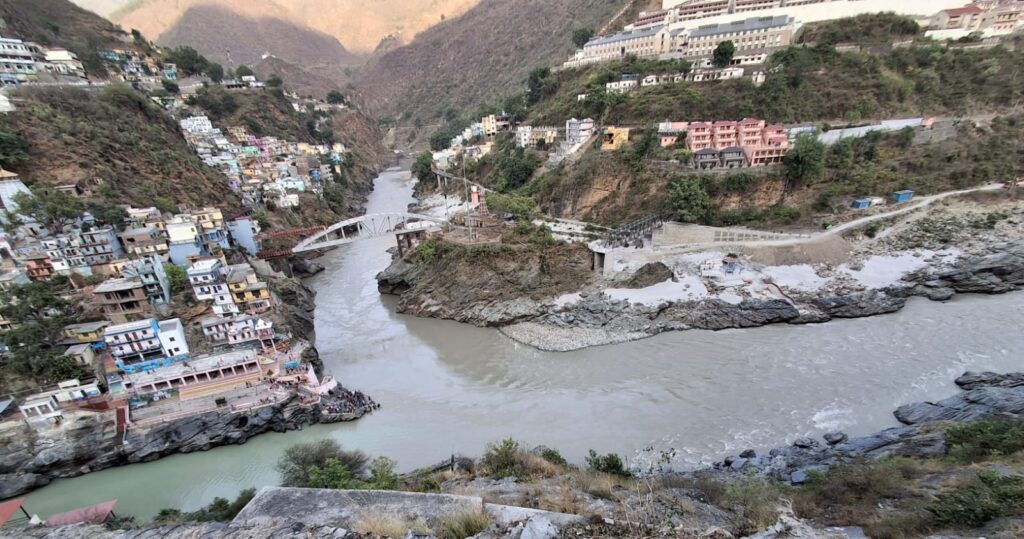
The trailhead is in Sari Village itself — a quiet Garhwali hamlet that has quietly built its identity around the lake above it. From the village parking area, the trail rises 2.5 km to the water, gaining roughly 430 metres in elevation.
The opening section is the steepest part. Stone steps carry you up through terraced fields before the gradient eases and the forest closes in around you. Oak and rhododendron take over. In spring, the rhododendrons bloom red along the entire route, making this one of the more beautiful short approaches in the region. Through summer and autumn, the canopy stays dense and cool even in the middle of the day.
After the initial climb, the trail flattens considerably. Light comes through the canopy in long, broken lines. The sounds of Sari Village disappear. Most trekkers reach the lake in 60 to 90 minutes — a pace that families with children manage comfortably. There's no exposed ridge, no technical section, and no route-finding required. The stone-paved path is clear throughout.
The lake appears without warning when the forest opens. No gradual reveal — just still water, open sky, and the Chaukhamba range sitting in both at once.
Ponies are available from the village if needed, at around ₹500–800 one way.
"The reflection is famous. The silence around it is what people remember."
Overnight
Camping at Deoria Tal
Staying overnight is the point. A day trip gives you the lake. A night gives you the silence, the stars, and — if the morning is clear — the Chaukhamba reflection in that specific kind of early light that only exists for about forty minutes.
Camping is regulated under the Kedarnath Wildlife Sanctuary's rules. Tents are pitched roughly 100 metres from the lakeside — a restriction put in place by court order to protect the fragile meadow ecosystem. In practice it makes no real difference to the experience; the camp still looks straight at the water and the peaks behind it.
Local operators in Sari Village and guides at the lake offer full packages: dome tent, sleeping bag, and meals — typically breakfast, dinner, and morning chai — for ₹1,500–₹3,500 per person per night. Budget setups sit at the lower end; better-organised camps with thicker sleeping bags and more reliable food push toward the higher. Forest department entry fees are nominal and collected at the trailhead checkpoint.
The nights are cold even in summer. Carry a warm layer regardless of the season. Stargazing at this altitude, away from any light pollution, tends to surprise people who didn't plan for it. A few small dhabas near the lake serve basic hot food — limited menu, but reliably hot and welcome after a cold night.
When to Go
Best Time to Visit Deoria Tal
The lake is technically accessible year-round, but the experience changes significantly with the season. Two windows stand out clearly above the others.
Spring
March – May
The most photogenic season. Rhododendrons bloom red and pink along the entire trail, temperatures at the lake stay between 5–10°C at night, and the Chaukhamba views are crisp on clear days. April is the sweet spot for colour and conditions combined.
Early Summer
June
Early June is workable — pleasant days, good visibility, occasional afternoon cloud build-up. By mid-June the monsoon begins pushing in from the east. Go early in the month if this is your window, and keep a close eye on road conditions.
Monsoon
July – September
Worth skipping. The Garhwal region sees heavy rainfall and landslide risk. The trail gets slippery, leeches appear in the forest section, and cloud cover makes the reflection effectively invisible. The road to Sari can also get blocked for hours.
Autumn & Early Winter
October – December
The post-monsoon sky is as clear as it gets all year. October and November deliver the sharpest Chaukhamba reflections. December brings snowfall and quieter trails — a very different experience for those who come prepared for the cold.
Combining Destinations
Deoria Tal from Chopta
Chopta sits about 28 km from Sari Village by road — roughly 45 minutes to an hour of driving through forest and switchbacks. Many travellers combine the two destinations, treating Deoria Tal as the opening act of a longer circuit that runs on to Tungnath and the Chandrashila summit.
As a standalone day trip from Chopta, Deoria Tal is entirely manageable — drive to Sari, trek up, spend time at the lake, and be back in Chopta by mid-afternoon. But the people who combine both places tend to stay longer. The lake earns a night; Chopta earns another. The circuit doesn't feel rushed when you give it four days.
Our Chopta Travel Guide covers the base camp in full — where to stay, what the meadow looks like across seasons, food options, and how to plan the night before the Tungnath climb. And the Chandrashila Trek Guide handles everything from that pre-dawn start to the summit panorama.
The two destinations complement each other in a way that's hard to manufacture: Deoria Tal is horizontal — a lake, a reflection, stillness at altitude. Chandrashila is vertical — a climb, a panorama, the whole Garhwal range at once. Together they make a short trip feel complete.
"Deoria Tal is where the Uttarakhand circuit begins to feel like more than a list of places."
How to Connect It
A Suggested 4-Day Uttarakhand Itinerary
This is the route most travellers end up taking — sometimes by accident, sometimes by design. It works in either direction, but Rishikesh → Deoria Tal → Chopta → Chandrashila is the natural flow.
Arrive in Rishikesh
Most people flying or training into Uttarakhand pass through Rishikesh first. It's the logical staging point — good accommodation across budgets, easy transport connections, and worth a few hours on the ghats in the evening. Our Rishikesh itinerary covers where to stay and how to organise the drive to Ukhimath the following morning.
Rishikesh → Sari Village → Deoria Tal
Leave early — the drive to Sari takes 7 to 8 hours. Arrive by early afternoon, drop your bag at a homestay or pre-arrange your camping gear, and head straight up the trail. The lake in late afternoon light is a different thing entirely from the morning. Camp overnight at the lake.
Sunrise at the Lake → Drive to Chopta
Wake before dawn. The hour between first light and full morning is the reason you stayed overnight — the reflection, the quiet, the cold. Trek back to Sari Village and drive to Chopta by late morning or noon. Settle in, rest, and get an early night — the next day starts at 4 AM.
Chandrashila Trek → Drive Home
The Chandrashila Trek begins before dawn from Chopta — 3.5 km to Tungnath temple at 3,680 m, then another 1.5 km to the summit at 4,130 m. On a clear morning the panorama takes in Nanda Devi, Trishul, Chaukhamba, and Kedar Dome in one sweep. Back in Chopta by midday; drive toward Rishikesh or Haridwar in the afternoon.
Costs
Budget for a Deoria Tal Trip
Deoria Tal remains one of the more affordable Himalayan experiences — the trek is short, the infrastructure is local, and the pricing hasn't been inflated by organised tourism. The breakdown below is per person, based on 2025 prices.
| Category | Notes | Approx. Cost |
|---|---|---|
| Transport (Rishikesh → Sari → return) | Shared jeep + local cab | ₹700–1,200 |
| Homestay in Sari Village | With dinner + breakfast | ₹800–1,500/night |
| Camping at Deoria Tal | Tent, sleeping bag, all meals | ₹1,500–3,500/night |
| Forest Entry Permit | Kedarnath Wildlife Sanctuary | ₹150–200 |
| Food (if not on a package) | Dhabas at lake + meals in village | ₹300–600/day |
| Local Guide | Optional — not required, useful in winter | ₹500–800/day |
| Estimated Total (2 nights) | Budget travel, inclusive | ₹4,000–8,000 |
Prices are indicative for 2025. Peak season (April–May, October–November) may push camping packages toward the higher end. Private transport raises the transport figure significantly.
Common Questions
Frequently Asked Questions
Is Deoria Tal worth visiting?
Yes, without much qualification. The lake is genuinely beautiful, the trek is short enough to do without much preparation, and the campsite sunrise is one of those experiences that justifies the whole trip. It also connects naturally to Chopta and the Chandrashila Trek if you want to extend into a longer circuit.
Can you camp at Deoria Tal?
Yes. Camping is permitted under forest department regulations, with tents set up approximately 100 metres from the lakeside to protect the meadow. Local operators in Sari Village arrange full packages — tent, sleeping bag, and meals — for around ₹1,500–₹3,500 per person per night.
How difficult is the trek?
Easy to moderate. The 2.5 km trail from Sari Village is well-paved and clearly marked, with a steep opening section that flattens into forest. Most people complete it in 60–90 minutes. First-time trekkers and families with children do it comfortably.
Can Deoria Tal be done in one day?
Technically yes — it's close enough to Chopta or Ukhimath for a day trip. But the early morning reflection and sunrise light are the whole reason people come. An overnight stay at the campsite is strongly recommended.
When is the reflection visible at Deoria Tal?
Early morning, on calm days with clear skies. The best windows are October–November and March–May. Wind disturbs the lake surface, so the light just after sunrise — before any breeze picks up — is when the reflection is at its clearest.
What Deoria Tal Leaves You With
There are places that reward ambition and places that reward attention. Deoria Tal belongs firmly to the second category. You don't earn it through difficulty. You earn it by showing up early, staying still, and letting the light do what it does to still water at altitude.
The Chaukhamba reflection is real. So is the cold. So is the silence — the specific quality of it at 2,400 metres, before the day starts moving. Most people who visit once find themselves thinking about when to come back.
And most of them, on the drive out through the oak forest, are already thinking about Chopta — and the trek to Chandrashila that waits just beyond it. That's usually the sign of a route that got to you in a way you didn't entirely expect.