
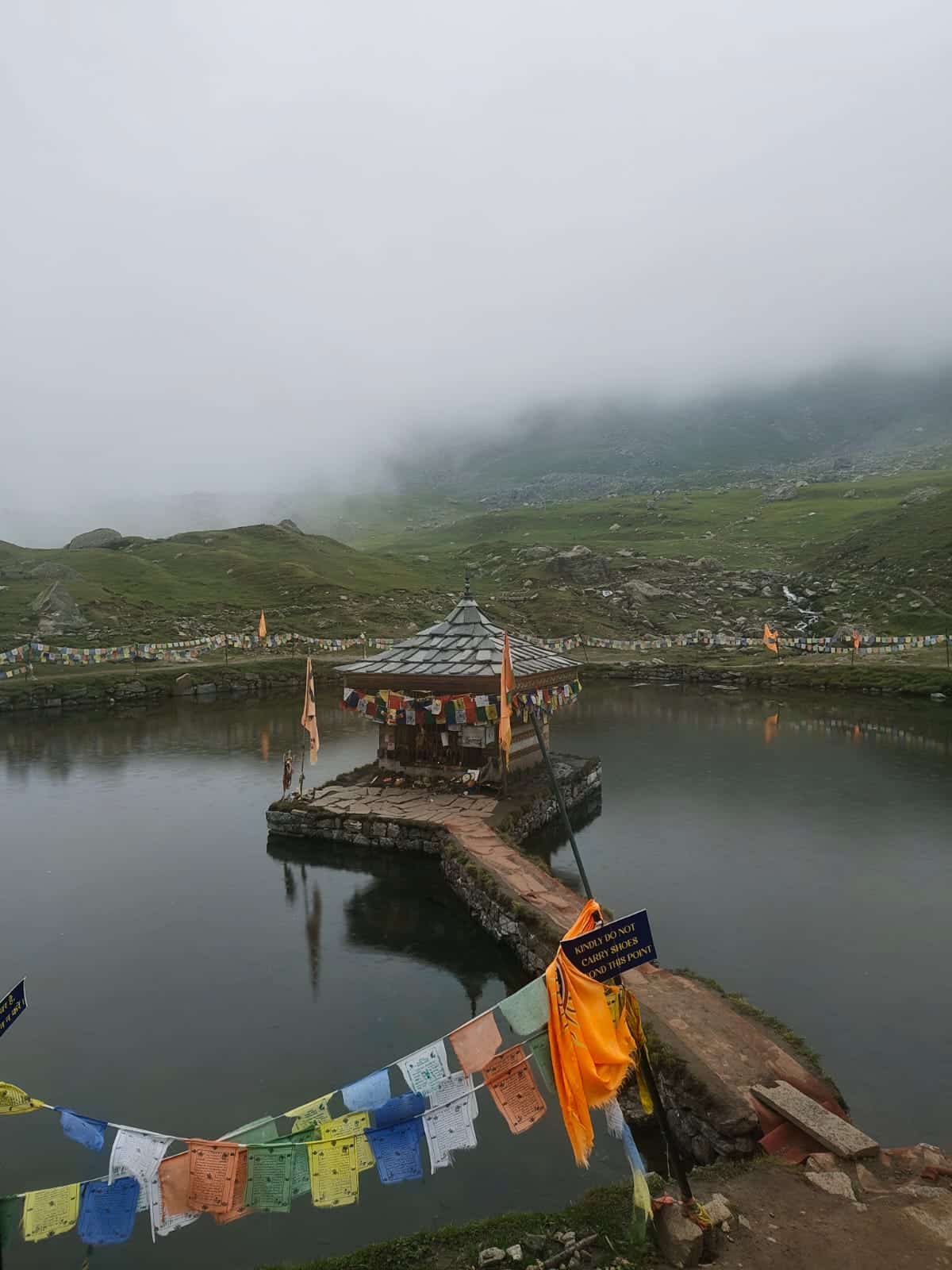
We got lost on the Yulla Kanda trek, right near the gate on the way down, when the trail just disappeared under water. No signal, no visibility, no one around to shout back when we called out. That's usually the part people want to hear about first when I tell this story. But it didn't come out of nowhere. It came out of a late breakfast, a friend who couldn't go on, a bag left behind on the trail, and a plan that was supposed to be a simple one-day trek. Here's the whole thing, in the order it actually happened, because the getting-lost part only really makes sense once you know everything that led up to it.
Getting to Yulla and Setting Off Without a Guide
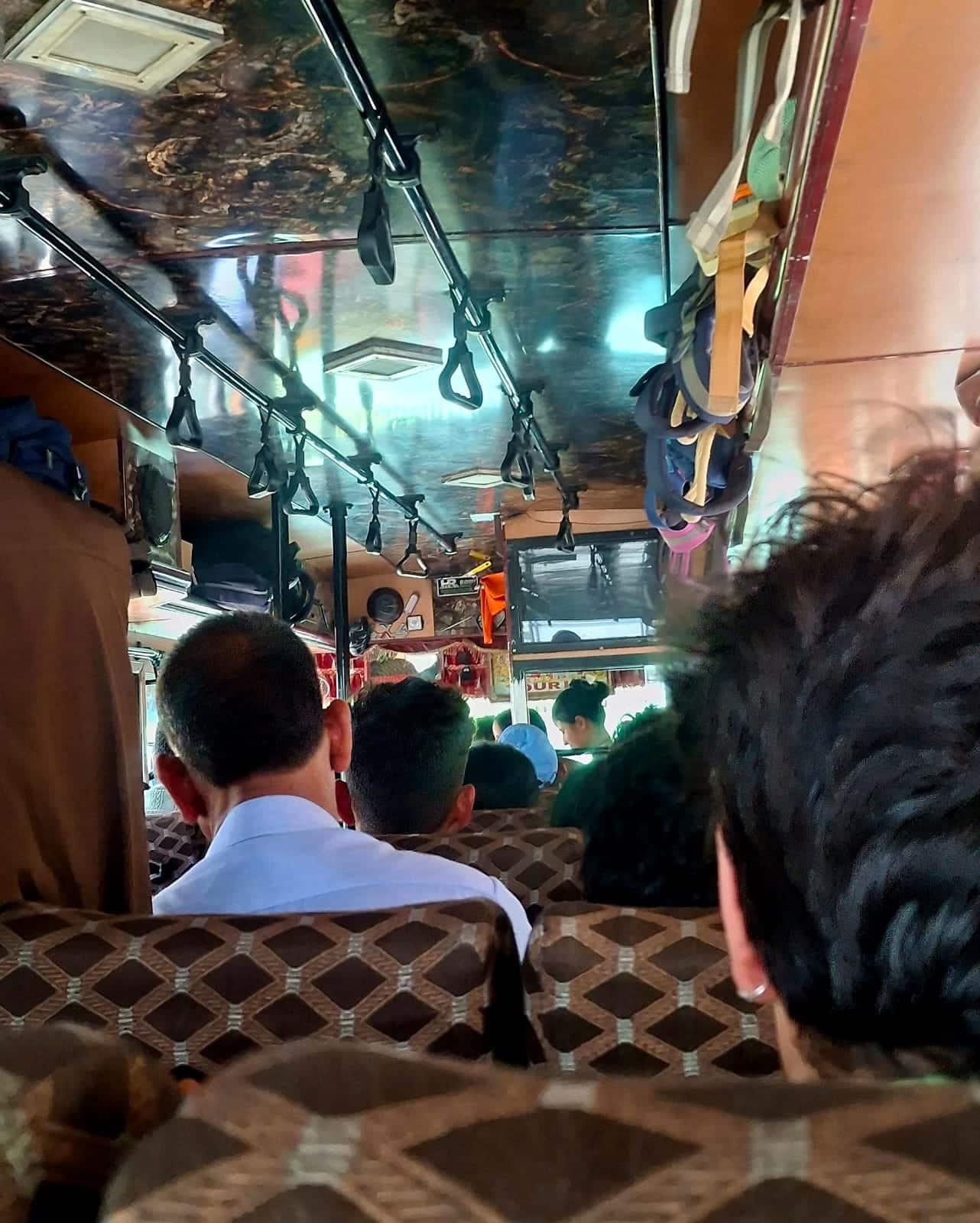
We were three people — me, my brother, and a friend — doing the Yulla Kanda trek independently, with no guide and no fixed group, which meant that whatever happened that day, we'd be the ones figuring it out. Just getting there took a while in itself: a Volvo bus from Delhi to Shimla, then an HRTC bus from Shimla toward Kinnaur to get closer to Yulla, one long leg of travel folding into the next until we finally reached the base. By the time we were actually standing there ready to start walking, we'd already been travelling for a good stretch, which is easy to forget once the trek itself becomes the main event — but the day didn't start at the trailhead, it started long before that, on buses and in transit, with tiredness already quietly building up. I'm not going to get into the full route or transport breakdown here, since that's covered properly in the Yulla Kanda Trek Guide. What matters for this story is simpler: going independently meant there was no trek leader, no automatic headcount, and no built-in fallback if something went sideways. That detail matters a lot more later than it seemed to at the time.
We stayed at Bayul Mountain View Homestay in Yulla village the night before starting — nothing eventful, just somewhere to sleep and eat before the climb — but it's worth mentioning because it's the last "normal" part of the trip before things started drifting off-plan. Everything from the next morning onward, the late start, the confusion about distance, the friend who turned back, the bag left on the trail, all of it traces back to that one ordinary night in the village, when none of us had any reason to think the day ahead would end the way it did.
Our Plan Was Simple, Until It Wasn't
The plan itself was simple on paper: do the whole trek — up to the temple and back down — in a single day. We stopped for breakfast before setting out, which pushed our start later than we'd meant it to, and at the time that felt like a minor delay, the kind of thing you don't think twice about because breakfast is breakfast and an hour doesn't seem like it should matter. It ended up mattering a great deal, because instead of wrapping up in a day, the whole thing stretched into a day and a half. Part of that was the late start. Part of it was that I wasn't at my best physically that day — I had some health issues going on and pushed through anyway, which slowed our pace more than I expected it to, though at no point did it feel like a reason to stop. We kept moving at a steady rhythm once we actually got going, taking breaks when we needed them, and it rained on and off through the day, which is worth flagging early: the weather wasn't a dramatic twist that showed up later in the story, it was already there in the background the whole time, on and off, unremarkable until it wasn't.
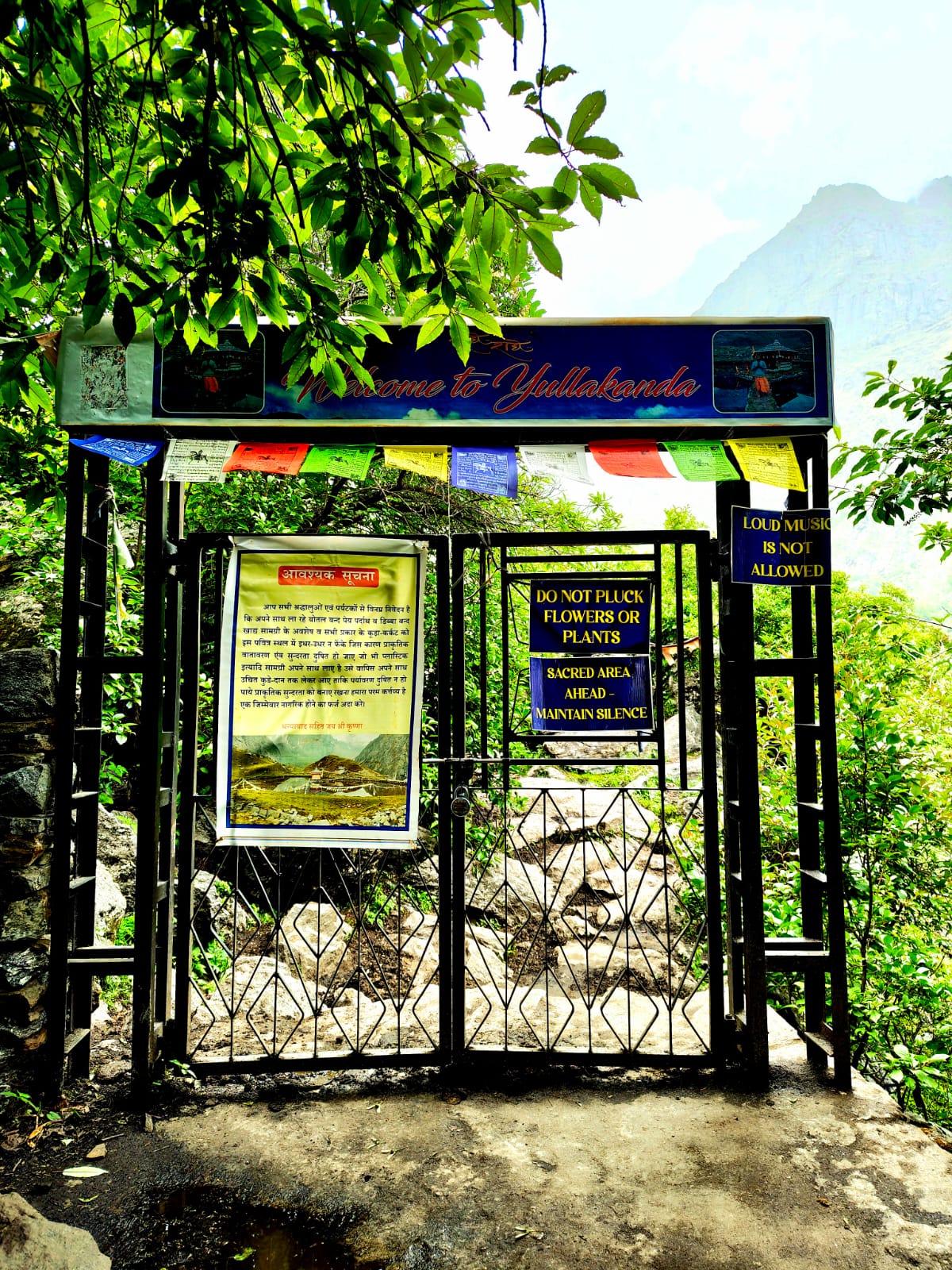
Eventually we reached the gate — an iron arch strung with prayer flags, marking the point where the trail turns properly wild. Someone there told us the temple was still around 3 km away, and that the stretch beyond it was supposed to be the best part of the whole trek: open meadows and views worth every step. What they didn't mention quite as clearly was that the same stretch also gets noticeably harder past that point. Then someone else told us it was actually 2 km more than that, and that contradiction — small as it sounds — was the moment my friend decided she was done. She didn't want to continue, and she made it clear she needed me to come back with her, so I turned around too, and we started walking back together, about half a kilometre, give or take. Somewhere in that stretch, something in me pushed back. I told her I wasn't ready to stop there, that I was going to finish the trek that day or the next. She thought about it for a bit and told me to go ahead without her, so I turned around again and headed back toward the temple.
Worth being honest about: turning back up the mountain alone, while a friend continues down alone in the other direction, isn't something either of us would casually recommend. It worked out for both of us. It easily could not have.
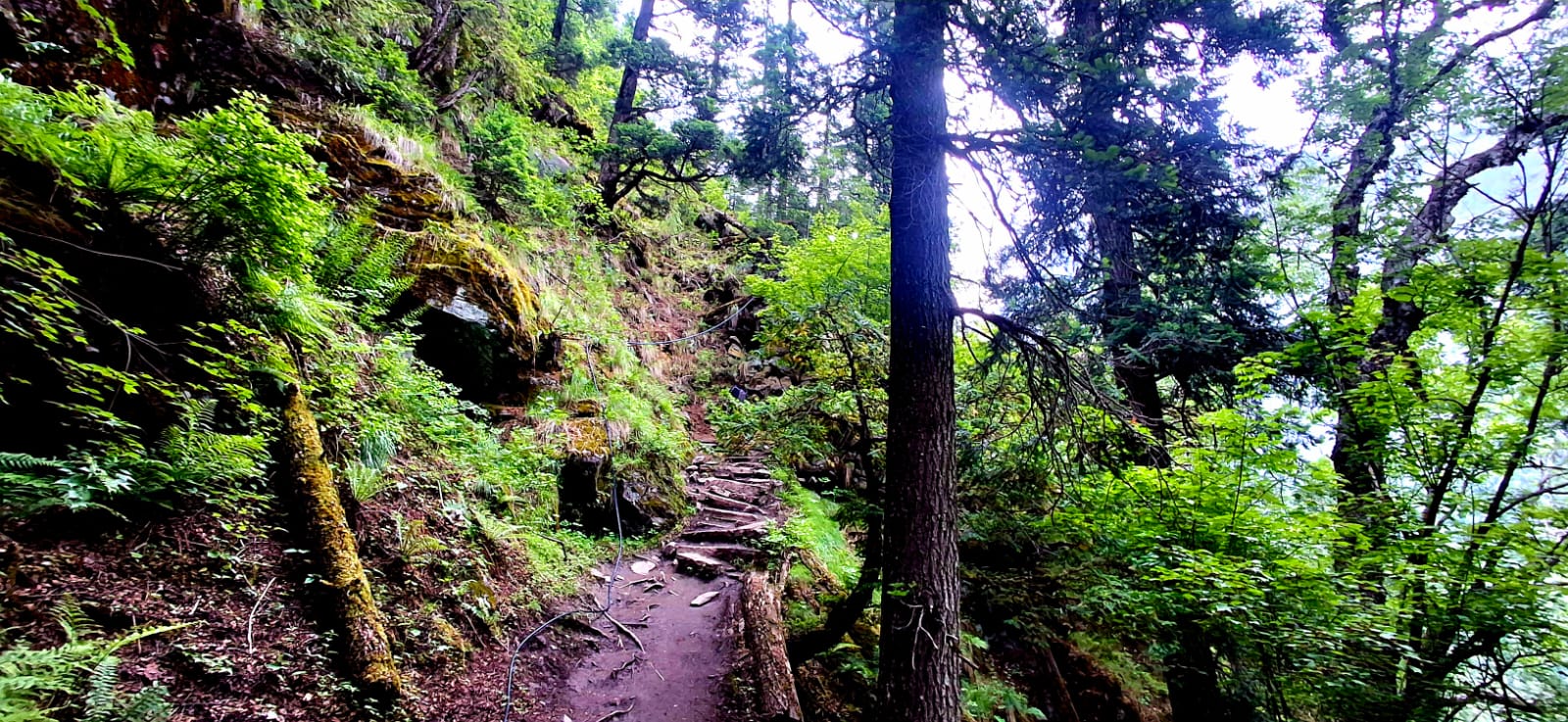
One detail from this back-and-forth matters a lot later: at some point in all the turning around, I left my trekking bag behind on the trail, with my jacket and raincoat inside it. In the moment it barely registered as a decision — it was just something that happened while my attention was somewhere else entirely, on my friend, on the distance, on whether to keep going. A few hours later, it mattered a great deal more. If you're planning this trek independently, it's worth reading up on realistic distances and pacing before you go, rather than relying on whoever you happen to run into on the trail, since even a small miscommunication about "how much further" can change the whole shape of your day. The Yulla Kanda Trek Guide has that context if you want it going in.
Reaching the Krishna Temple
The sun was starting to set as I kept walking, and along the way I ran into my brother, who'd already reached the temple — he'd gone on ahead earlier, back when I was still planning to head down with my friend. I also ended up joining a small group on the trail, including a guy named Abhishek, and it was good timing, because by the time we all got to the temple it was cold and raining, and I no longer had my raincoat, since it was sitting in the bag I'd left behind on the trail. Abhishek lent me his without much fuss, and it was a small thing, but it made a real difference standing up there in that weather.
We got some photos in before heading back down. We were genuinely standing between the clouds at that point, which made the whole climb feel worth it even with everything else going on that day. If you want more on the temple itself and what's actually up there, that's its own separate piece — the Krishna Temple article covers it properly. What I'll say here is just that the moment at the top was brief. We didn't linger. It was already getting dark, the rain wasn't letting up, and everyone in the group seemed to understand without saying it out loud that the descent needed to start soon. So it did.
The Descent, and Then Being Lost
My brother started showing signs of altitude sickness on the way down — we're not going to attach a firm medical label to it, just describe what was visible: he was struggling more than the descent itself should have caused. I held his hand, and we picked up the pace to get him to lower ground faster, hoping it would ease as we dropped. That would have been manageable on its own, but the ground wasn't cooperating either. I had proper trekking shoes on; he didn't. On dry, even ground, that difference barely registers, but on a wet, muddy descent trail it means a lot, and he slipped and fell two or three times on the way down — not from any misstep on his part, just the ground itself giving way underfoot, enough to slow us both down and add stress to a descent that was already getting harder by the minute, between the altitude sickness, the mud, and the fading light. If there's one practical thing worth pulling out of this on its own, it's this: if you're trekking with someone else, actually check that everyone has trekking-appropriate footwear, not just regular sneakers. It's an easy thing to assume is fine right up until someone's on the ground.
By the time we made it back to roughly where the gate should have been, we realised we'd lost the trail entirely. It was dark. It was raining. And there was water everywhere, enough that nothing looked like the path we'd walked earlier that day, every landmark we might have used to orient ourselves just gone under it. We called out into the dark, hoping someone nearby might hear us. We used our torch, trying to catch anyone's attention. We even tried sending out an SOS signal.
Nothing. No response from anywhere.
I remember the feeling wasn't panic exactly. It was more like being completely out of obvious next moves, not scared in a dramatic way, just genuinely unsure what the next right decision even was, standing in the rain with water where the trail used to be and no way to ask anyone what came next. This is the part I'd actually want someone planning this trek to sit with before they go: don't assume you'll have a way to call for help if something goes wrong here. Network coverage in the area can be unreliable, and it's better to plan around that assumption than to discover it in the middle of the night.
Finding Our Way Back, and the Unexpected Night at Camp
At some point, we decided standing still wasn't getting us anywhere either, so we just walked into the water. Not exactly a confident decision, more of a "we have to do something" one, taken because the alternative was standing there indefinitely hoping the situation would resolve itself.
Then we spotted some cows nearby, which, strangely, was reassuring — if the water was shallow enough for cows to be standing around in, it was probably shallow enough for us to get through too. It's a ridiculous thing to base a safety call on, but out there, at night, in the rain, it worked, and we kept moving, and then, finally, we saw the gate. That was the first real moment of relief all night.
We booked the nearest camp we could find, ₹1,000 for the night, and that was that — we were staying put. There was no network at the camp either, and we needed to let our family know we were safe, so my brother, along with someone from the camp, hiked back uphill a short distance, just far enough to catch some signal and make a call, handling the payment for the camp while he was up there too. It's worth knowing roughly where the nearest camps or shelter options are along this route before you set out, not because you'll necessarily need them, but because it's one less thing to figure out if your plans suddenly change on you. While my brother was out getting signal, he and the camp staff member came across another couple who'd also gotten lost that same night. We'd assumed we were the last people still trying to make it down. Turns out we weren't — they were just as relieved to finally find their way as we'd been, and there's something almost funny about that in hindsight, two separate groups, same night, same water, same confusion, both eventually finding the same gate without knowing the other existed.
Going Down the Next Morning
We started the descent again around 6 the next morning, and it took a while, but the whole thing felt completely different in daylight. Calmer, slower, no urgency chasing us, the same trail that had been unreadable a few hours earlier now just an ordinary path down a hill. At one point on the way down, we stopped and ate Maggi, and honestly, it might have been the most normal, grounding moment of the entire trip — after a night like that, something as ordinary as instant noodles on a hillside felt like exactly what we needed, a small, deliberately unremarkable moment after a night that had been anything but.
This time, we weren't doing it alone either. A handful of other trekkers heading down the same morning fell in with us, and walking it alongside people who'd had their own version of the night before made the whole thing feel almost ordinary. It helped that the way down was a genuinely easier walk than the way up — this stretch is mostly stairs, with no mules using the path, so the footing stayed dependable in a way it hadn't the night before in the rain and the dark. If there's a small, practical thing worth pulling from this part, it's to carry as little as possible on a trek like this, and to keep ORS on you. A day and a half of walking with barely any real rest is exactly the stretch where it earns its weight.
By the time we made it back to our stay in Yulla village, all three of us were together again, and the first thing on everyone's mind was just getting clean and dry. We freshened up, and for a while it felt like the trek itself was actually, finally done.
It wasn't quite over, though — Yulla isn't exactly close to anywhere, and there was still a bus stop and a fair stretch of onward travel between us and an actual bed for the night that wasn't a ₹1,000 emergency camp. We set off again, walking down toward the bus stop, and almost immediately got lucky: a car was headed down the same road, and there was room for my brother and our bags. He hopped in with the luggage, which meant the rest of us covered the last stretch without carrying anything, which after the previous 36 hours felt like a small mercy. Not long after, a lift going all the way to Tapri turned up for all three of us — ₹500 for the three of us, which, given everything, felt like the easiest transaction of the entire trip. We reached Tapri, found the bus heading to Reckong Peo, and caught it at 5 pm for ₹80. Somewhere in that sequence of car, lift, and bus, the trek quietly turned back into an ordinary journey — the kind where you just sit by a window and let the hills go by.
What I'd Tell Someone Doing Yulla Independently
Nothing about this trek is extreme. Nothing about our night was either, really — it was mostly one small decision leading into the next, a late breakfast, a bag set down and forgotten, a distance that turned out to be longer than someone said, until we were somewhere we didn't expect to be. Here's what I'd actually tell someone planning to do this on their own, without a guide:
- Start early. Even something as small as breakfast before setting out can cost you daylight you'll need later, especially on the descent. Our "one day" trek turned into a day and a half.
- Keep your weather gear on you, always. Leaving my jacket and raincoat behind in my bag felt harmless in the moment. It stopped feeling harmless the second the weather changed.
- Match your footwear to the trail conditions. Proper trekking shoes make a real, physical difference in mud, especially heading downhill.
- Don't count on having network. Have some kind of plan for what happens if you can't call anyone.
- Know your shelter options ahead of time. Even a rough idea of where the nearest camp is can make a bad situation much easier to handle.
- Going independently means no one else is managing the risk for you. No trek leader, no automatic headcount, no built-in fallback. That's part of what makes it worth doing, and part of what makes it worth taking seriously.
None of this turned into an emergency. But it easily could have gone differently with just one or two more things stacked against us. If you're doing this trek independently, plan like that's a real possibility, not because it will happen, but because it's cheap to prepare for and expensive to deal with if you don't.