
Kalpa Travel Guide: How to Reach, Things to Do, Cost & Itinerary
How to Reach, Things to Do, Cost & Itinerary
There's a specific kind of mistake almost everyone makes on the Shimla-to-Spiti route, and it's this: they treat Kalpa as a place to sleep. Just a stopover between the long haul from Shimla and whatever comes next — Nako, Tabo, Kaza. You arrive tired, you eat, you sleep, you leave before the light's even properly hit the mountains. And that's a shame, because Kalpa is one of the only places on this entire route where you don't have to go anywhere to see the thing you came for. You just open your curtains.
Across the valley, close enough that it fills your window, is Kinner Kailash — a 6,050-metre peak that both Hindus and Buddhists in this region consider sacred, and one that pilgrims spend two to three days trekking to reach on foot. You don't have to do any of that. You just have to be standing in the right village at the right hour, watching the early light turn the snow gold and then crimson, while the rest of your trip is still asleep. Add apple orchards thick enough to walk straight into, a genuinely easy blend of Hindu and Buddhist tradition in daily life, and homestays that feed you like family rather than guests, and you start to understand why we think Kalpa deserves more than a night on the way through.
This Kalpa travel guide covers everything we wish we'd known before we got here — the transport chain that will test your patience, what there actually is to do once you've arrived, where to stay, what to budget, and the permit rules that trip up a surprising number of travellers heading onward into Spiti. Everything below comes from doing this route ourselves, cross-checked against what actually holds true today, not just recycled from other blogs.
Kalpa at a Glance
Before we get into the detail, here's the shape of the trip if you're just trying to decide whether Kalpa fits your itinerary at all.
Kalpa sits at around 2,759 metres, roughly 14 kilometres above Reckong Peo, and about 260 kilometres from Shimla (per Himachal Pradesh's official Kinnaur district tourism page) — which in mountain terms means a full day of driving, not a quick hop. One night is enough if you're purely passing through, but two lets you actually slow down and see the place rather than just the inside of a taxi. For the Kalpa leg specifically — the Peo-to-Kalpa cab, a night's homestay, and a full day of sightseeing by taxi — we spent around ₹2,500 per person, splitting costs across two people, and that's before food and before you factor in getting yourself onward. The best window to visit is April through June if you want green hillsides and a clean view of the peaks, September into October if you'd rather time it with the apple harvest, and December through March if you're chasing snow and don't mind the chance that cloud cover might hide the mountain entirely on the day you're there. And no, you don't need your own vehicle to do any of this — buses and taxis cover the whole route. You'll just need patience, because this region runs on its own schedule, not yours.
Is Kalpa Worth Visiting?
Short answer: yes, and more than most itineraries give it credit for. The longer answer is really just what we said above — most people treat this as a transit stop, and transit stops don't get properly seen. We've met travellers who spent a single night here, left before sunrise, and never really looked up. Given a full day, Kalpa turns from "the place we slept before Spiti" into one of the more memorable stops of the entire trip, mostly because it asks so little of you. You don't trek to the view. You don't queue for it. You just have to actually stay long enough to notice it.
How to Reach Kalpa
There are a few ways in, but for most travellers coming from Delhi this ends up being a multi-leg journey rather than a single bus or cab ride. Here's the route we took, which is also the most common one — and every link in it has its own quirks, which is worth knowing before you go rather than discovering on the day. In our case, Kalpa came right after the Yulla Kanda trek, so if you're stringing the two together, our trek guide covers that leg in detail.
If you're starting from Delhi, there's no direct route to Kalpa at all — you go through Shimla first, and the sensible way to do that is an overnight bus so you're not burning a whole travel day getting there. Ours cost ₹1,100, left Delhi around 11pm, and rolled into Shimla by 8am, which meant we still had a full day ahead of us to keep moving rather than losing a night to the journey.
From Shimla, the next leg is the genuinely long one: Shimla to Reckong Peo, which eats most of a day as the road winds through Kinnaur's valleys. We took a non-HRTC bus for ₹520 per person, boarded by 8:30am, and still didn't reach Tapri — just short of Peo itself — until 5:15pm. This is the stretch to pack snacks for, download something to read on, and generally not expect much energy left over once you arrive.
The final leg, Reckong Peo to Kalpa, is around 14 kilometres — a half-hour drive on paper — but it's a steep, winding climb that earns every one of those kilometres, gaining altitude fast enough that Peo visibly shrinks below you within minutes. We paid ₹500 for a cab to cover this stretch, and honestly, of every leg on this route, it's the one we'd least try to save money on by waiting for a bus. Local buses and shared taxis do run here, but not often enough to plan a tight schedule around.
Which raises the obvious question — bus or taxi, generally? Our take after doing this whole route: use buses where they're frequent and well-served, like Shimla to Peo, and use taxis for the short, awkward, infrequent stretches like Peo to Kalpa, where the time you'd save waiting for a bus isn't worth what you'd save in rupees. And build in a mental buffer regardless, because missing a connection somewhere on this route isn't a remote possibility — it happened to us more than once, and every time, a cab from the nearest stop bailed us out for somewhere in the ₹500–800 range. Think of that as your plan-B tax for the whole journey, not a sign anything went wrong.
If you're self-driving or planning to rent a bike: do it in Shimla. There are no vehicle rental options in either Reckong Peo or Kalpa, so arrange your ride before you leave — you can't sort this out once you're already in Kinnaur.
Kalpa vs. Reckong Peo
Kalpa
- Views
- Orchards
- Quiet atmosphere
- Mountain-facing stays
Reckong Peo
- More shops
- More restaurants
- Better connectivity
- Easier practical base
Once you're this far up the valley, there's a genuinely practical decision to make: do you actually stay in Kalpa itself, or base yourself down in Reckong Peo instead?
Kalpa gives you the view, the orchards, and a pace of life that slows you down almost against your will. Reckong Peo, by contrast, is Kinnaur's administrative hub — more shops, more restaurants, better connectivity, and critically, no climb to deal with if you're rolling in late and exhausted after a long travel day. There's no universally correct answer here, but there is a useful way to think about it: if the reason you're doing this whole trip is to wake up with Kinner Kailash outside your window, stay in Kalpa — that's the entire point, and Peo won't give it to you. If you'd rather have more services within easy walking distance and don't mind a short cab ride up for sightseeing, Peo does the job just fine.
How Many Days Do You Need in Kalpa?
If you've only got one day, that's enough to cover the core sights — the monastery, the main viewpoint, the nearby temples — comfortably by taxi. It'll feel satisfying, if a little brisk. Give it two days instead, and you can add Roghi village and its viewpoint, plus actually sit with the Kinner Kailash view for longer than the ten minutes it takes to get a decent photo before the group taxi moves on. Three days or more only really makes sense if you're not treating Kalpa as a checklist stop at all, but as a slow base — somewhere to read, walk through the orchards, and let the trip breathe a little before Spiti's longer, harder driving days begin.
Best Things to Do in Kalpa
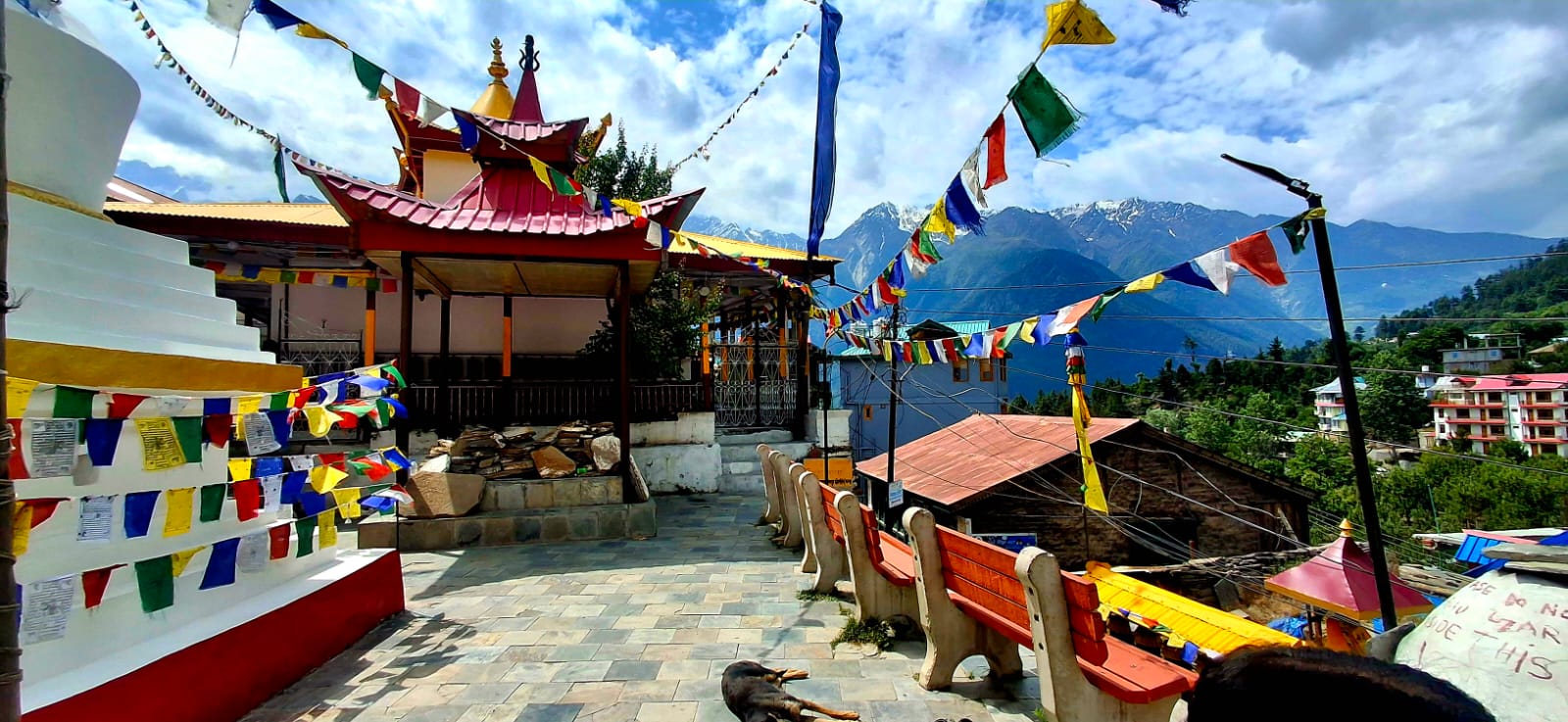
Kalpa Monastery is a good place to start, mostly because it's small and easy — a gentle orientation to the village before you head out to the bigger sights.
The real reason you're here, though, is the Kinner Kailash viewpoint. This isn't a vague "great mountain views" attraction — Kinner Kailash rises to roughly 6,050 metres and is considered a genuinely sacred site by both Hindu and Buddhist communities in the region, sacred enough that a multi-day pilgrimage trail exists purely to bring devotees to the mountain on foot. From Kalpa, you get a clear, comfortable view of the same peak without any of that effort, and it's worth going back to this viewpoint more than once during your stay if you can — the light on the mountain shifts noticeably from morning to evening, and it's not the same view twice. Worth being clear about the difference here: this is viewing Kinner Kailash from a distance, not undertaking the actual Kinnaur Kailash Yatra — that's a separate, registration-based pilgrimage trek to the mountain itself, run on its own schedule by the district administration, and it's a completely different undertaking from a day in Kalpa.
Kinner Kailash Viewpoint
Viewing the mountain from Kalpa.
Kinnaur Kailash Yatra
The separate pilgrimage trek.
From there, most day tours also take in Rolla Cliff, a dramatic drop-off point that gives you a real sense of scale over the valley below; the Narayan Nagini Temple, quieter and easy to skip if you're pressed for time but worth the short detour if you're not; and Brelengi Gompa Monastery, which rounds out the day with a distinctly Buddhist counterpoint to the Hindu temples nearby. We also stopped at Chandika Devi Temple in Kothi village, near Reckong Peo rather than Kalpa itself — an old, much-venerated temple dedicated to the Kinnauri protector goddess Chandika, and easy to fold into the same day if your taxi route passes through Peo anyway.
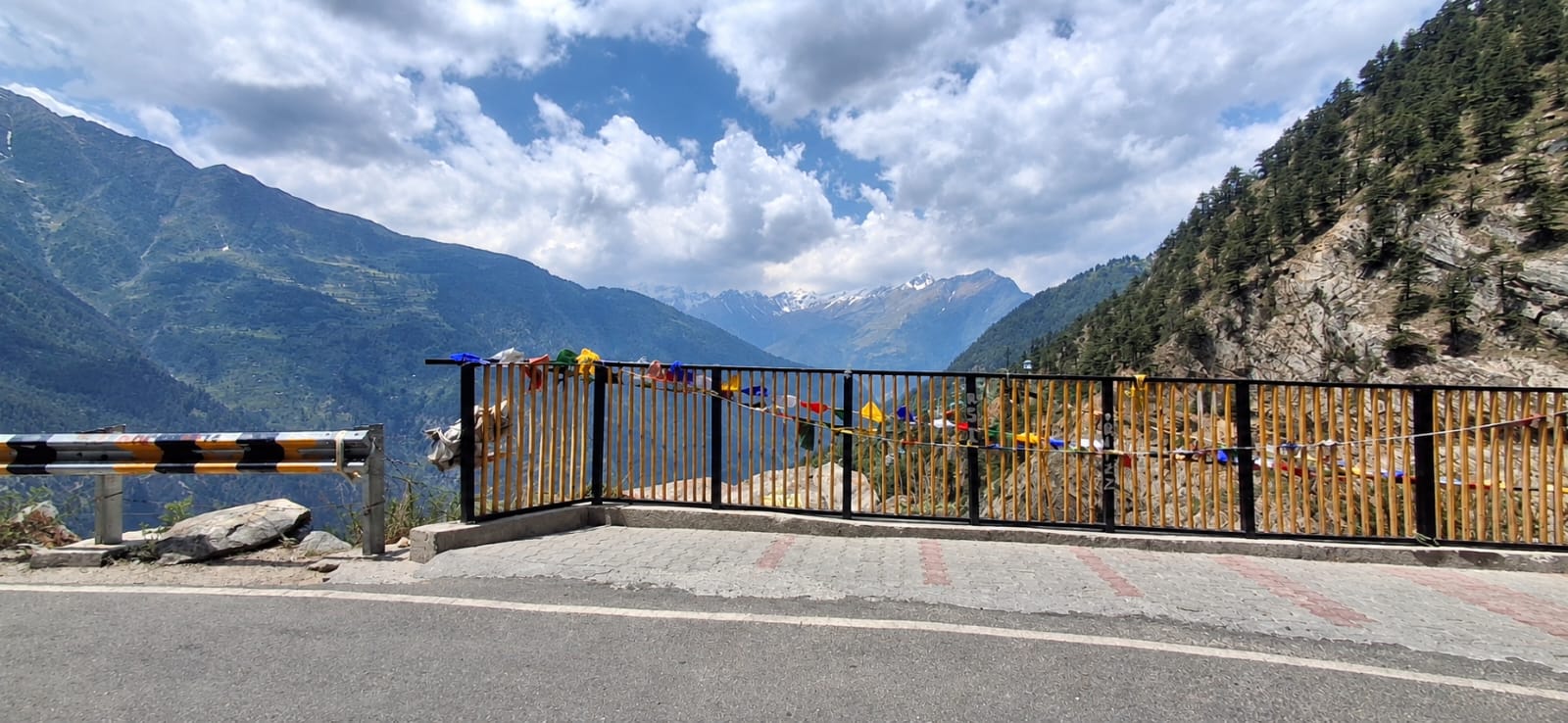
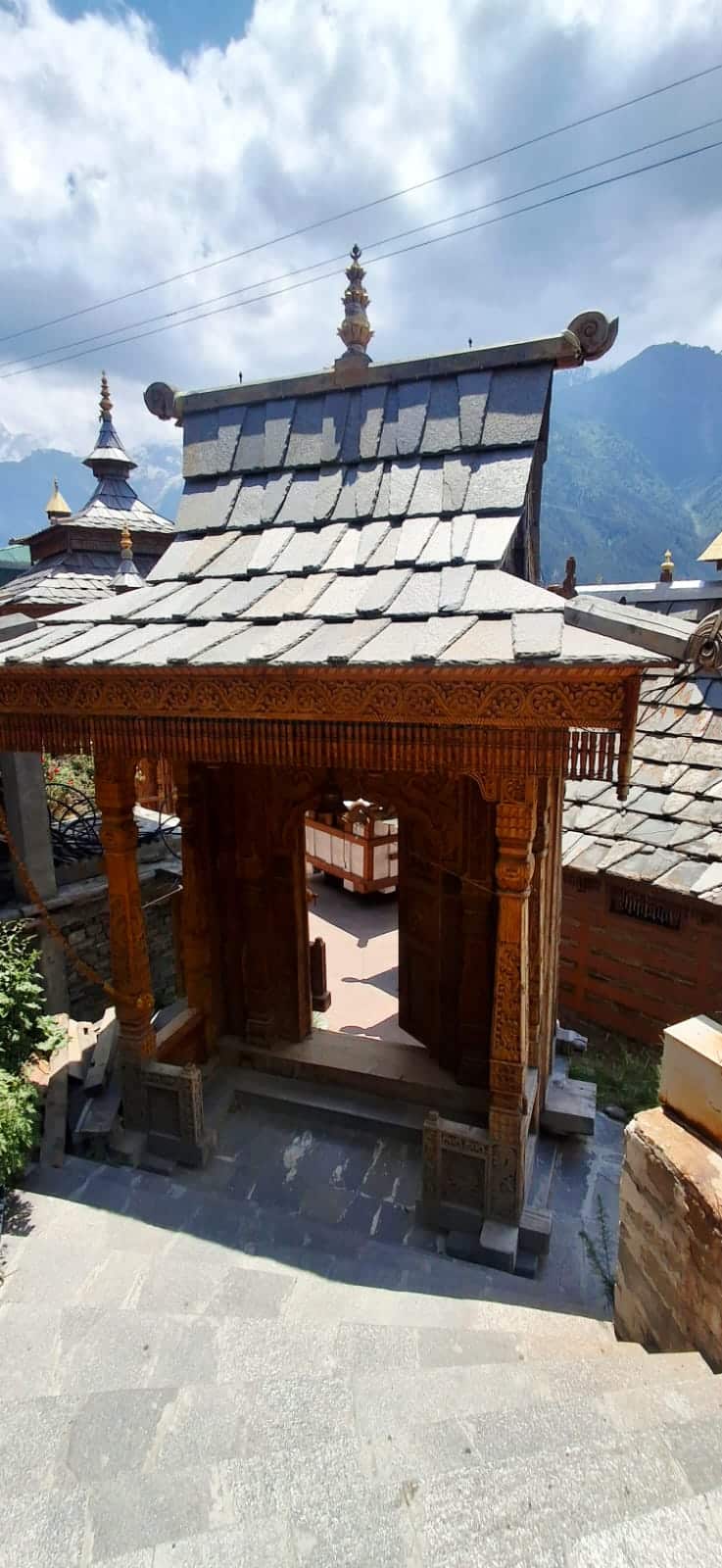
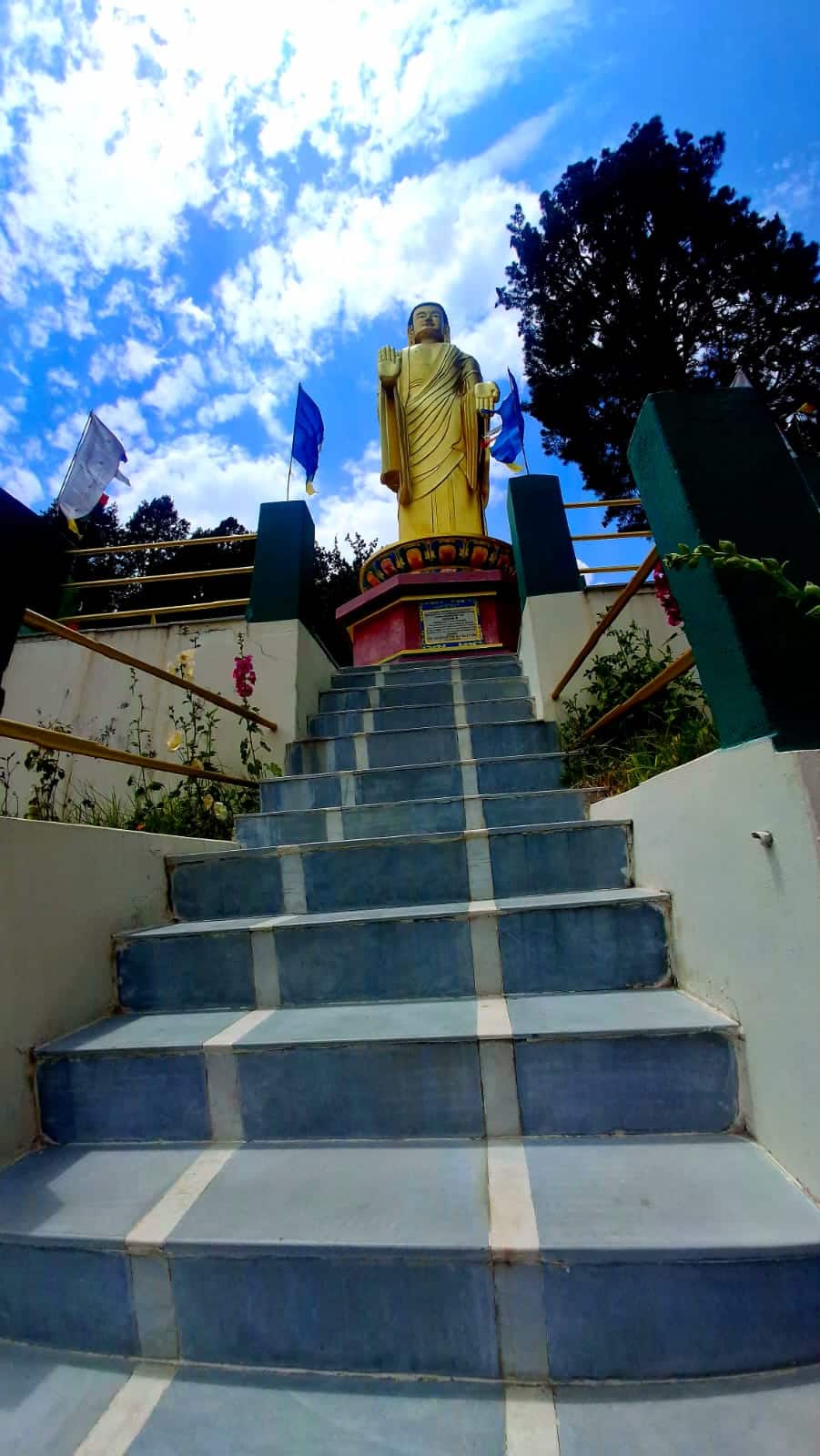
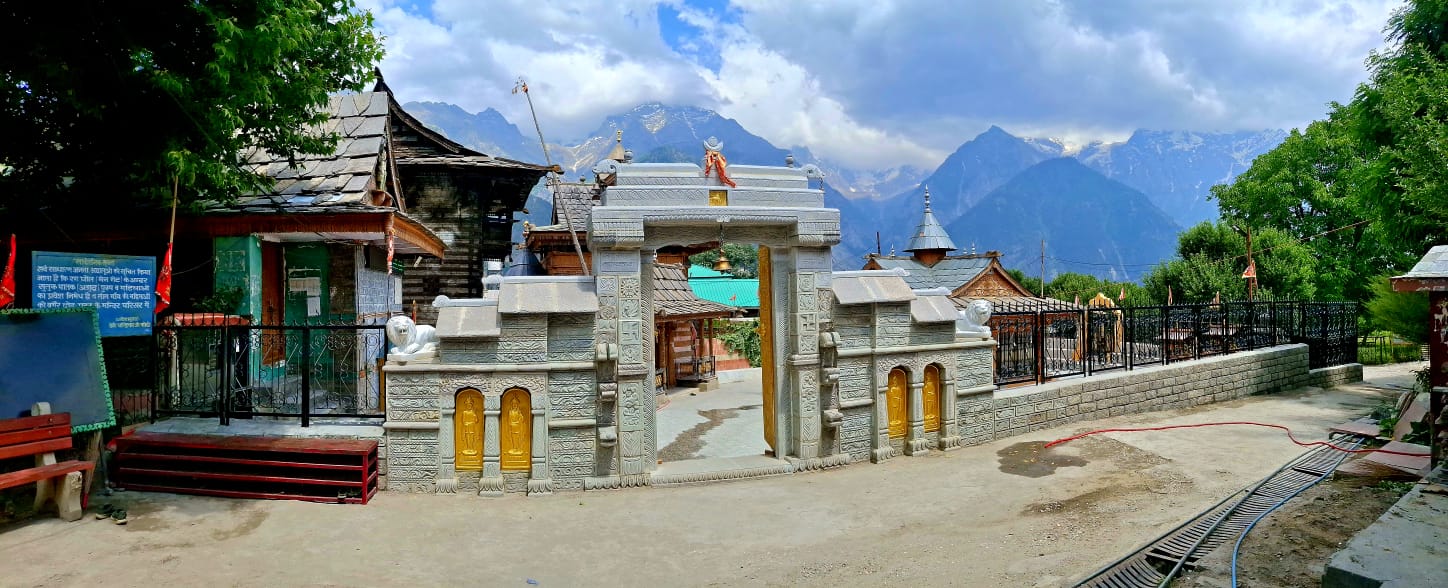
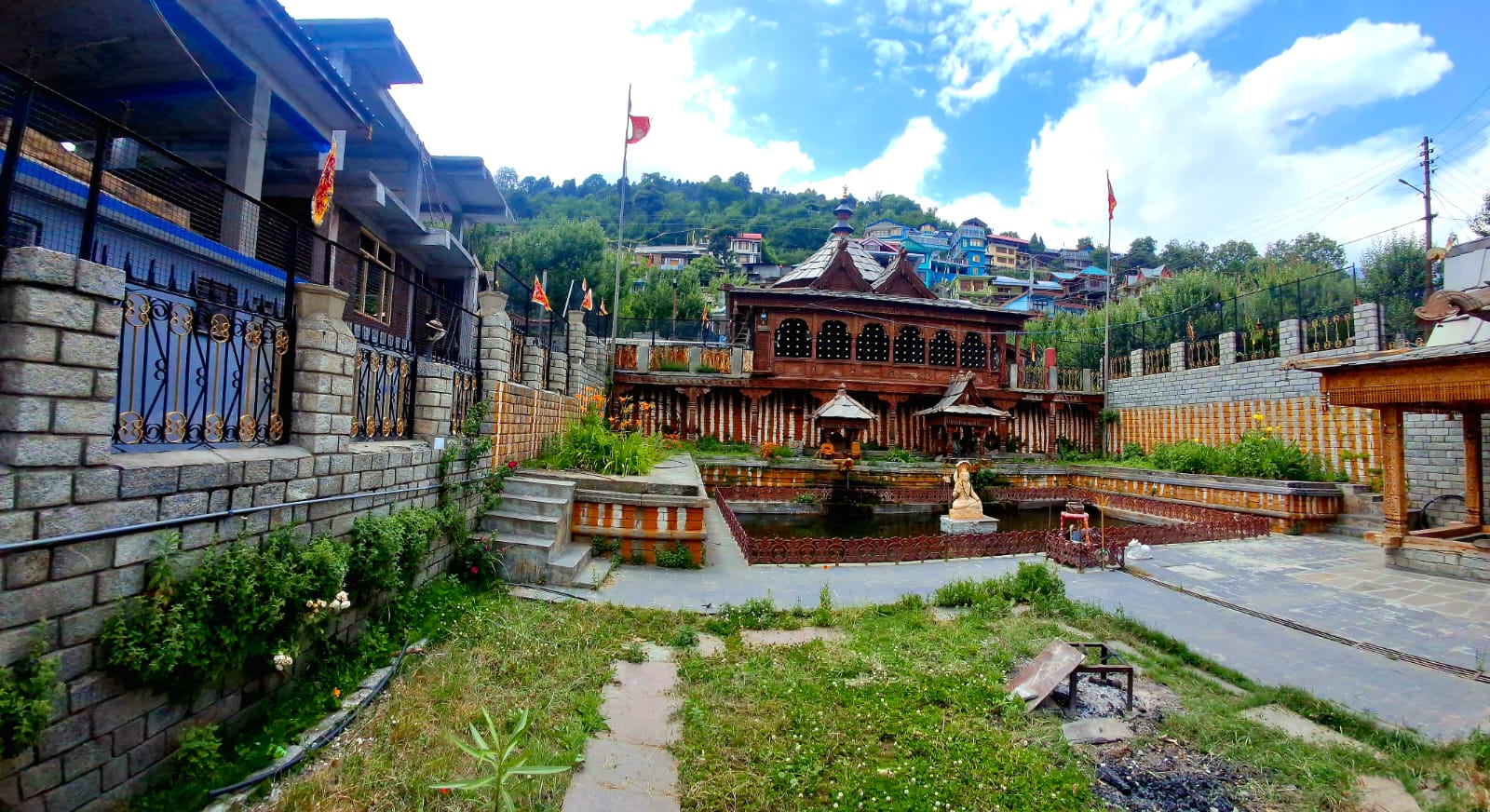
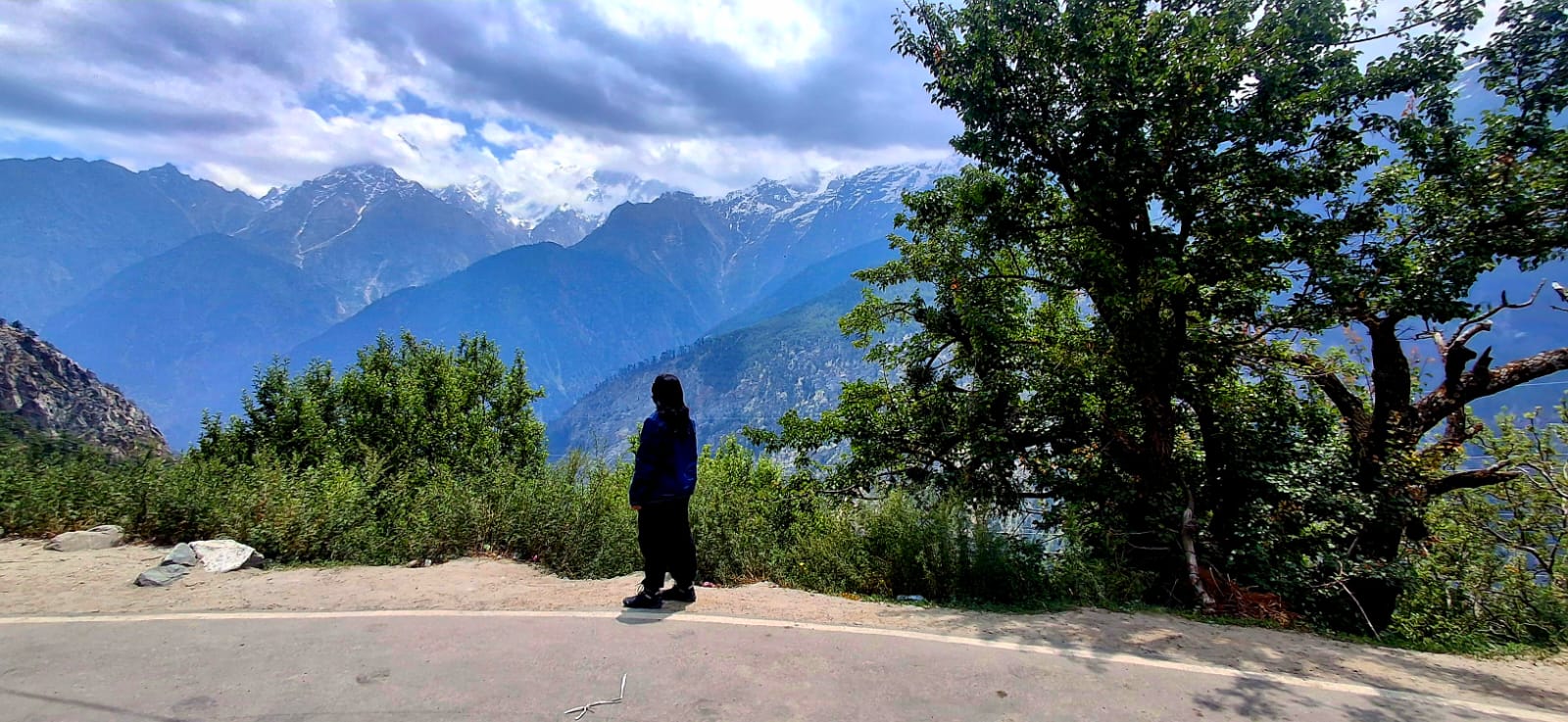
Roghi village and its viewpoint — also known locally as Suicide Point (third-party verified across multiple independent travel accounts) — sits about 4 kilometres beyond Kalpa. The name sounds dramatic; the reality is just a dramatic drop-off and a genuinely spectacular view, reached by a walk through apple orchards that's worth doing slowly rather than rushing. It's quieter than anything on the standard tour route, since most group taxis don't stop there by default.
For a genuinely offbeat add-on, we also made it out to Chaka Meadows, a high-altitude vantage point above Kalpa reached by an uphill walk from the Kalpa-Roghi road. It's a proper hike rather than a stroll, and it stays quiet even in peak season simply because most visitors don't know it's there — if you want the Kinner Kailash view without another tourist in frame, this is where you get it.
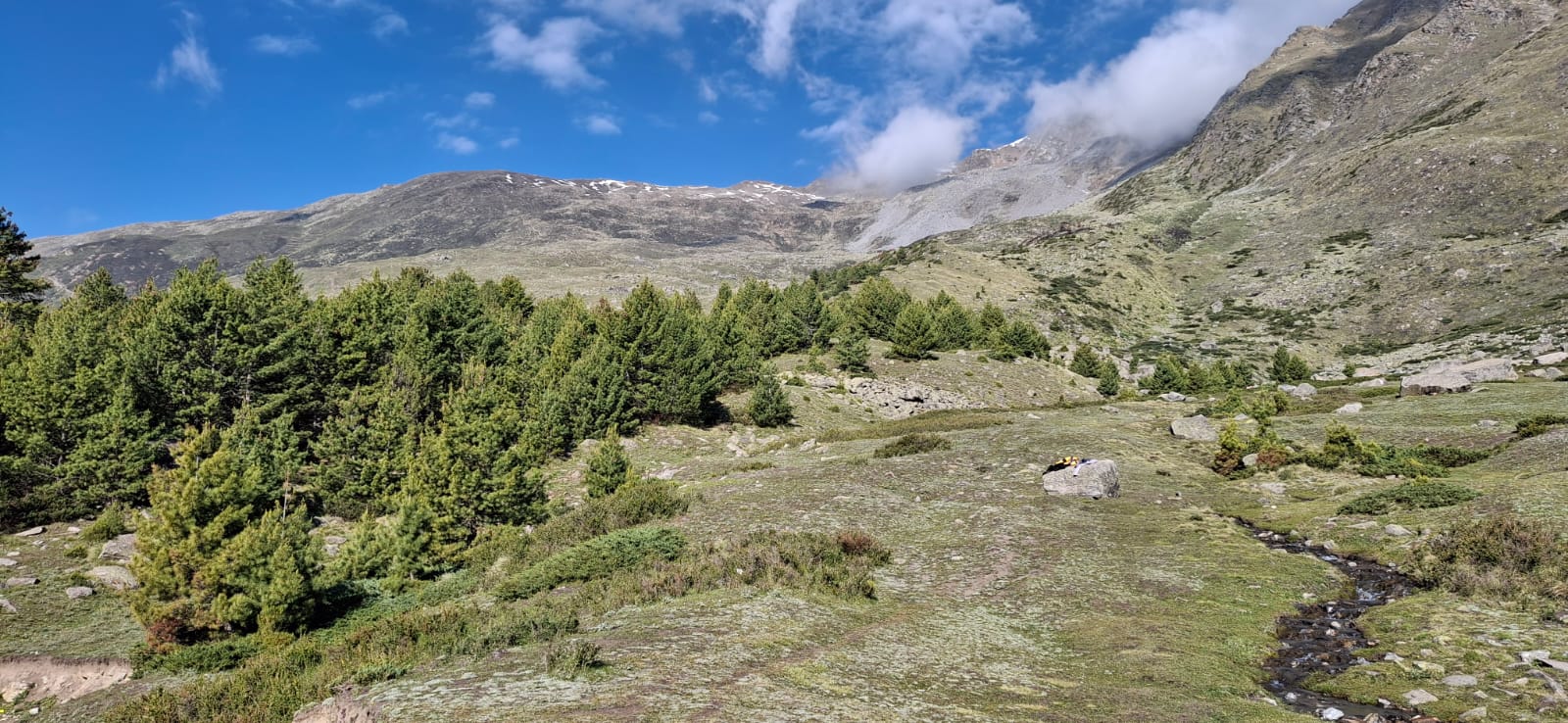
Here's the thing worth knowing: none of this needs two or three separate days. We covered Kalpa Monastery, Rolla Cliff, the Kalpa viewpoint, Narayan Nagini Temple, Brelengi Gompa Monastery, Chandika Devi Temple, Roghi village, and Chaka Meadows all in a single day, in one taxi, for ₹3,000, running from around 7am to 4:30pm. The catch is that Roghi and Chaka Meadows aren't always on a driver's default route, so ask for them specifically when you're booking the taxi rather than assuming they're included — most drivers are happy to add them if you say so upfront. Somewhere in the middle of that day, our driver pulled over and treated us to veg soup and momos — completely unprompted, just the kind of small hospitality that ends up defining a trip like this as much as any single sight on the itinerary does.
Kalpa 1-Day Itinerary (All Sights)
If you tell your taxi driver upfront that you want everything — including Roghi and Chaka Meadows, which aren't always default stops — the full circuit fits into one long day. Here's how ours played out.
That's a genuinely full day — 7am to 4:30pm with barely a break — so it only really works if you're comfortable moving at pace and don't mind the Chaka Meadows leg being a brisk walk rather than a leisurely one. If you'd rather take it slower, spreading the same list across two or three days (below) gives you more breathing room, especially for the walk out to Roghi and the climb to Chaka Meadows.
Kalpa 3-Day Itinerary (Relaxed Pace)
If a single 7am–4:30pm day sounds like too much moving, here's the same list of sights spread across three days instead — the version to pick if you'd rather walk to Roghi and Chaka Meadows unhurried than fit them into an already-packed taxi day.
Day 1 — Arrival & Taxi Circuit
Day 2 — Full Sightseeing Day
This is Day 2 of the relaxed, three-day version — the core taxi circuit without Roghi or Chaka Meadows folded in, so there's no need to rush: Kalpa Monastery and Rolla Cliff through the morning, the Kalpa viewpoint around midday when the light on Kinner Kailash is at its clearest, Narayan Nagini Temple, Brelengi Gompa Monastery and Chandika Devi Temple through the afternoon, and back at your homestay by around 4 to 4:30pm.
Day 3 — Offbeat Morning, Then Onward
This is the day to cut first if you're tight on time — everything essential to Kalpa is covered by the end of Day 2. But if you can spare it, Chaka Meadows in particular is worth the uphill walk precisely because most visitors skip it: it gives you the same Kinner Kailash view as the main viewpoint, without another tourist in frame. Pair it with the shorter Roghi walk in the same morning if you're moving at a decent pace, or split them across two half-days if you'd rather not rush either.
Where to Stay in Kalpa
We stayed at Silk Route Home Stay, a well-reviewed homestay with garden and mountain views, for ₹1,500 a room. It's the kind of place that doesn't need to try very hard — the orchards around it and the Kinner Kailash-facing windows do most of the work. If proximity to shops and a wider range of services matters more to you than waking up to that view, Reckong Peo (see above) is a short cab ride back down the hill. In peak season (April–June, and again through the apple harvest in September–October), it's worth messaging ahead rather than counting on a walk-in room — Kalpa's homestay count is small enough that popular ones do fill up.
Food & Eating in Kalpa
Kalpa does have restaurants, alongside homestay kitchens — it's not purely a homestay-only village the way some guides make it sound. Still, don't expect a big restaurant scene, and options thin out after dark. Our own homestay host was out one evening, and rather than go wandering an unfamiliar village after dark looking for an open kitchen, we ended up eating a packed noodles parcel we'd picked up earlier while out visiting places in Kalpa and Reckong Peo — and it was, without exaggeration, one of the better decisions of the entire trip. Carry a backup snack of some kind, especially for evenings when your homestay kitchen might not be running. Vegetarian food is easy to find throughout the day; it's specifically the after-dark options that thin out fast.
We ended up eating a packed noodles parcel we'd picked up earlier that day — and it was, without exaggeration, one of the better decisions of the entire trip.
Kalpa Trip Cost
Our actual Kalpa costs for two people (June 2026):
| Item | Cost |
|---|---|
| Reckong Peo → Kalpa cab | ₹500 |
| Homestay (per room) | ₹1,500 |
| Full-day taxi tour | ₹3,000 |
| Total | ₹5,000 (₹2,500/person) |
That figure excludes food and anything spent getting onward to Nako or the rest of Spiti — it's purely the cost of the Kalpa stop itself. If you're travelling on a tighter budget, a shared or basic taxi for sightseeing, a simple homestay room, and a bag of backup snacks will land you close to what we paid, split however many ways your group happens to be. If you'd rather travel more comfortably, a private, non-shared sightseeing taxi and a higher-end homestay will push both of those numbers up — we don't have a precise figure for a private-only taxi rate, since ours was already a full-vehicle day tour, but it's safe to budget meaningfully above the ₹3,000 we paid.
Best Time to Visit Kalpa
April through June gives you the clearest run of good weather — green slopes, unobstructed views of Kinner Kailash, and generally reliable road conditions. We visited in June ourselves and had exactly the kind of landscape and mountain views you'll see throughout this guide. July through September brings the monsoon, and with it the biggest variable of the year: heavier rain raises the risk of a slippery road and occasional disruption on the Peo–Kalpa stretch, so if you're travelling in this window, check conditions in the days immediately before you go rather than weeks in advance. September into October is apple harvest season, and the weather tends to stay clear through it. December through March brings snow, which photographs beautifully, but comes with two real caveats — the road up from Peo can close after a heavy fall, and cloud cover can hide the one view you actually came for.
Practical Things to Know Before You Go
UPI is accepted at many homestays and shops in Kalpa and Reckong Peo, but don't rely on it exclusively — signal drops, and plenty of small transactions (cab drivers, tips, roadside stalls) still run on cash only (third-party verified). Reports on ATM availability in Kalpa itself are inconsistent — some travel accounts place the nearest ATM in Reckong Peo only, while others report ATMs in Kalpa town too — so treat Reckong Peo as the safer bet if you need to withdraw, and carry more cash than you think you'll need either way.
BSNL generally has the strongest coverage across Kinnaur; Airtel and Jio can work around Kalpa and Reckong Peo, but get patchier the further into the valley you go (third-party verified) — don't plan around having a signal once you're moving.
None available in Kalpa or Reckong Peo — the last place to rent a bike or car is Shimla, so sort your vehicle before you leave if you're planning to self-drive.
At around 2,759 metres this isn't extreme, but the elevation can feel noticeable if you've come up quickly from lower ground — give yourself a little time to settle in rather than rushing straight into a full day of sightseeing.
Even in the better months, mornings and evenings here are properly cold, so pack real layers rather than a single light jacket.
Kinnaur is a border-adjacent district, so don't assume you can fly freely. Check the DGCA's Digital Sky no-fly-zone map before you go, and treat any restriction as final rather than testing it locally.
Transport frequency across this whole stretch is lower than you'd expect from a well-travelled tourist route, so build buffer time into your plans rather than trusting a tight connection to hold.
Permits: What's Actually Official
This is where a lot of guides get vague or repeat numbers that don't trace back to anything, so here's what Himachal Pradesh's own Kinnaur district tourist guidelines actually say.
Kalpa itself requires no permit for anyone, Indian or foreign — it sits below the Inner Line, the boundary that's commonly cited as starting near Jangi, roughly 35 kilometres further along the road. Indian citizens don't need any permit at all, for Kalpa or for continuing on into Spiti.
Beyond that line, the area is officially designated a Protected Area, and foreign nationals can't enter or stay in it without a permit. Per the district's own tourist guidelines:
- Foreign tourists are permitted in groups of two or more, sponsored by a recognized Indian travel agency, with a pre-set itinerary.
- The listed fee for the Inner Line Permit is ₹200 per person, paid at the e-Governance Centre, plus separate service charges from whichever agency sponsors your group.
- Permits can be issued by several designated offices, including the SDM office at Kalpa, based out of Reckong Peo — so you don't need to arrange this in Shimla in advance; it can be sorted locally.
- For direct queries, the District Tourism Officer can be reached at 01786-222253, or through the SDM office at Reckong Peo, Kinnaur (172107).
A caveat worth being upfront about: independent traveller reports online often cite different fees, processing times, and paperwork than what's listed officially, and how strictly the "groups of two, agency-sponsored" rule is enforced for solo travellers seems to vary by office and by year. Since this is exactly the kind of detail that can derail a trip if you get it wrong, treat the above as your starting point and confirm the current fee, required documents, and process directly with the district tourism office or the SDM office before you rely on it — including this guide.
Going From Kalpa to Spiti
If you're continuing the classic route onward, it runs Kalpa to Nako, then Tabo, then Kaza. As covered above, this is the point where foreign nationals need their Protected Area Permit sorted, while Indian citizens can simply keep driving. We took a cab for this leg ourselves after missing our scheduled bus — which, by this point in the guide, probably won't surprise you, since missed connections turned out to be something of a running theme on this route. We're flagging it here specifically so it doesn't have to be a running theme on yours.
Kalpa Travel Guide: FAQs
Is Kalpa worth a dedicated stop, or just a night on the way to Spiti?
Do I need a car to visit Kalpa?
Is Kalpa safe for solo travellers?
How cold does it get?
Do foreigners need a permit for Kalpa?
Does UPI work in Kalpa?
Want to know what actually happened?
We came to Kalpa after an exhausting journey from Shimla, hired a ₹3,000 taxi for the day, met two dogs, got an unexpected momo-and-soup treat from our driver, and nearly starved because we were too lazy to find dinner.
Read the Kalpa Experience →