
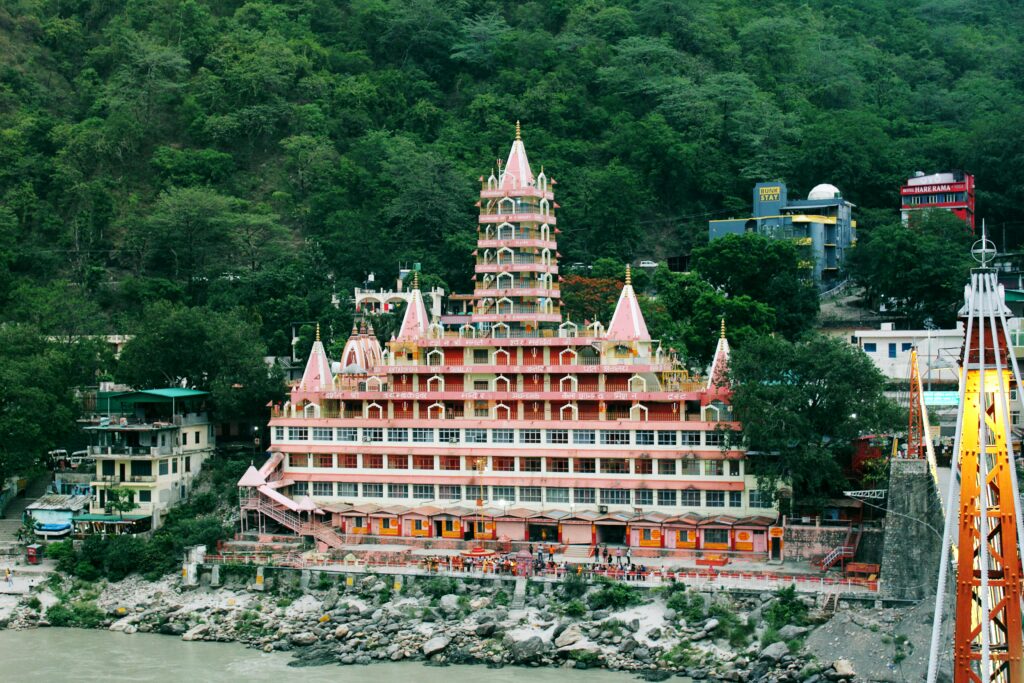
WHERE THE GANGA RUNS WILD
AND TIME SLOWS DOWN
Between the roar of white water and the hush of incense smoke, Rishikesh sits at the edge of two worlds — the Himalayas and the plains, the ancient and the now. This guide covers everything: a three-day itinerary, honest budget breakdown, the best cafes, rafting tips, solo travel hostels, and the small details that make Rishikesh unforgettable.
Quick Travel Overview
Why Rishikesh Stays With You
There are places you visit, and places that visit you in return. Rishikesh is the second kind. The moment you cross Ram Jhula at dusk — the bridge swaying gently, temple bells drifting across the Ganga's green current — something shifts. Even if you came only for the bungee jump, you'll leave with something harder to name.
Spiritually, Rishikesh has been the anchor of yoga and Vedic tradition for centuries. The ashrams aren't tourist props — many have been operating for generations. You can genuinely study here: morning Hatha, afternoon meditation, an evening of silence. The International Yoga Festival held every March draws teachers and seekers from sixty countries.
But the city doesn't ask you to be spiritual. It welcomes backpackers who want nothing more than cheap thali, strong coffee, and a hammock over the river. The cafe culture along Tapovan and Laxman Jhula is genuinely good — brownies, filter coffee, books on the shelf, and views that would cost a fortune anywhere else.
And then there is the river itself — blue-green, ice-cold, and alive. Rafting the Grade III and IV rapids of the Ganga between Shivpuri and Rishikesh is one of the finest adventure experiences in India. The Himalayas never quite disappear from view. Even in the middle of town, you're always slightly aware of the mountains.
The Beatles came here in 1968 to meditate. Backpackers have been following ever since — not searching for the same thing, but finding something just as valuable.
Best Time to Visit Rishikesh
Rishikesh shifts character with every season. Here's what each one actually feels like — crowds included.
Spring &
Summer
This is the sweet spot. February through April is genuinely beautiful — mild mornings, light crowds, the river at a photogenic level. March brings the International Yoga Festival and a brief surge of visitors, but the vibe remains good.April and May heat up (30–36°C) but evenings stay pleasant. Rafting is excellent February through May before the monsoon swells the river.
Crowd level: Low to moderate in Feb–March; moderate in April–May.
Monsoon
The mountains turn electric green and the Ganga swells brown with Himalayan silt. It's dramatic and beautiful — but river rafting is completely suspended due to dangerous water levels.Landslides can affect road access. The leeches near Neelkanth and the waterfalls are real.That said, accommodation prices drop, the city empties of tourists, and the cafe culture gets even more atmospheric in the rain.
Crowd level: Very low. Not ideal for adventure seekers.
Autumn &
Winter
October and November are arguably the best months : clear skies, cooler air, post-monsoon greenery, and rafting season fully open.December and January bring genuine cold (4–8°C at night), thick sweaters, and bone-chillingly beautiful mornings by the river.The Christmas–New Year period sees a sharp tourist spike. Heavy crowds in October (post-monsoon rush) and late December.
Crowd level: Very high in October and December–January. Moderate in November.
If you want rafting without the crowds, aim for late February or early November. These are Rishikesh's best-kept open secrets.
How to Reach Rishikesh
🚌 Delhi to Rishikesh by Bus
The most popular route for budget travellers. UPSRTC and Uttarakhand Roadways run overnight Volvo AC sleepers from ISBT Kashmere Gate and Anand Vihar, Delhi.Journey time is typically 6–7 hours. Fare ranges from ₹450–₹900 depending on service class.Book on RedBus or directly at the bus stand.The bus typically drops you at Rishikesh Main Bus Stand near Haridwar Bypass Road — from there, autos or shared cabs go to Tapovan and Laxman Jhula.
🚂 By Train via Haridwar
Rishikesh has its own small station, but trains are limited and slow.The practical move is to arrive at Haridwar Junction — well connected to Delhi, Mumbai, and most major cities — and take a shared taxi or auto from there.Haridwar to Rishikesh is about 24 km, roughly 45–60 minutes by road (₹30–₹60 shared, ₹250–₹350 private cab).The Jan Shatabdi Express from Delhi to Haridwar is a convenient daytime option.
✈️ By Flight — Jolly Grant Airport
Jolly Grant Airport (Dehradun) is 35 km from Rishikesh.IndiGo and Air India operate flights from Delhi (40 min).Pre-paid taxis from the airport cost ₹700–₹1,000 and take 50–70 minutes.Useful if you're short on time, though flight prices from Delhi rarely justify the convenience over a sleeper bus.
🛵 Bike Trip from Delhi
Delhi to Rishikesh by bike is a solid 300 km on the NH334 — a well-maintained route through Meerut and Muzaffarnagar.Experienced riders do it in 6–7 hours.It's a proper road trip opener, especially if you plan to extend into the Chopta–Tungnath belt afterward.Rent bikes in Delhi from RoyalBrothers or Motozen; Royal Enfield Himalayans are the local favourite.
Best Areas to Stay in Rishikesh
Rishikesh splits into distinct zones, each with its own atmosphere. Choosing the right area matters more here than in most Indian cities.
Tapovan
The backpacker heartland.Tapovan is where the cafes are best, the rooftop stays cheapest, and the mix of yoga retreats, budget guesthouses, and riverside hangouts is densest.Streets are narrow, slightly chaotic, and completely charming.Most travellers aged 20–35 end up here.
Laxman Jhula
Named after the iconic suspended bridge (currently being reconstructed — the new bridge is partially functional).The area around it is slightly more commercial but full of character — good guesthouses, riverside restaurants, and easy access to the Beatles Ashram.A strong all-rounder.
Swarg Ashram
The spiritual quarter.Quieter, older, lined with dharamshalas and ashrams.If you're here for yoga retreats or a genuinely meditative stay rather than Instagram cafes, this is your place.Budget accommodation is available in ashrams for as little as ₹200–₹500 per night, meals included in some.
Rishikesh has a surprisingly good hostel scene.Zostel Rishikesh (Tapovan and Laxman Jhula branches),The Hosteller,and Shalom Backpackers are consistently well-reviewed for social atmosphere, cleanliness, and staff.Greenday Escapes is one of the most affordable with a calm river-view vibe.Skyard Hostel (Laxman Jhula) starts from ₹249 for dorms and has a rooftop cafe with mountain views.
Dorm beds typically range from ₹250–₹600/night.Private rooms in hostels run ₹900–₹1,800.Most have free WiFi, common areas, and notice boards for rafting/yoga class coordination.Female-only dorms are available at several properties including Shalom and Greenday. Book 2–3 days in advance during October, March–April, and the December–January window — beds disappear fast.
Rishikesh Budget Breakdown
Rishikesh is genuinely affordable. The numbers below reflect realistic costs for a mid-budget traveller spending 3–4 days.Go cheaper by staying in ashrams and eating thali; spend more by upgrading accommodation and booking guided activities.
| CATEGORY | BUDGET OPTION | MID-RANGE | APPROX. COST |
|---|---|---|---|
| Hostel / Stay | Dorm bed (Zostel, Shalom) | Guesthouse private room | ₹300 – ₹1,500/night |
| Meals | Thali + chai (₹80–₹150) | Cafe meal (₹250–₹500) | ₹300 – ₹800/day |
| River Rafting | Shivpuri to Rishikesh (16 km) | Marine Drive to Rishikesh (26 km) | ₹600 – ₹1,200/person |
| Bungee Jumping | — | Jump Heights (83m) | ₹3,500 – ₹4,500 |
| Scooty Rental | Per day | With petrol | ₹400 – ₹700/day |
| Yoga Class | Drop-in at local ashram | Certified school session | ₹150 – ₹600/class |
| Auto / Shared Cab | Within Rishikesh | Haridwar day trip | ₹30 – ₹400 |
| Beatles Ashram Entry | Indian nationals | Foreign nationals | ₹150 / ₹600 |
| Estimated Total (3 Days) — Budget Traveller | ₹3,500 – ₹6,500 | ||
Ganga Aarti — Timings & What to Expect
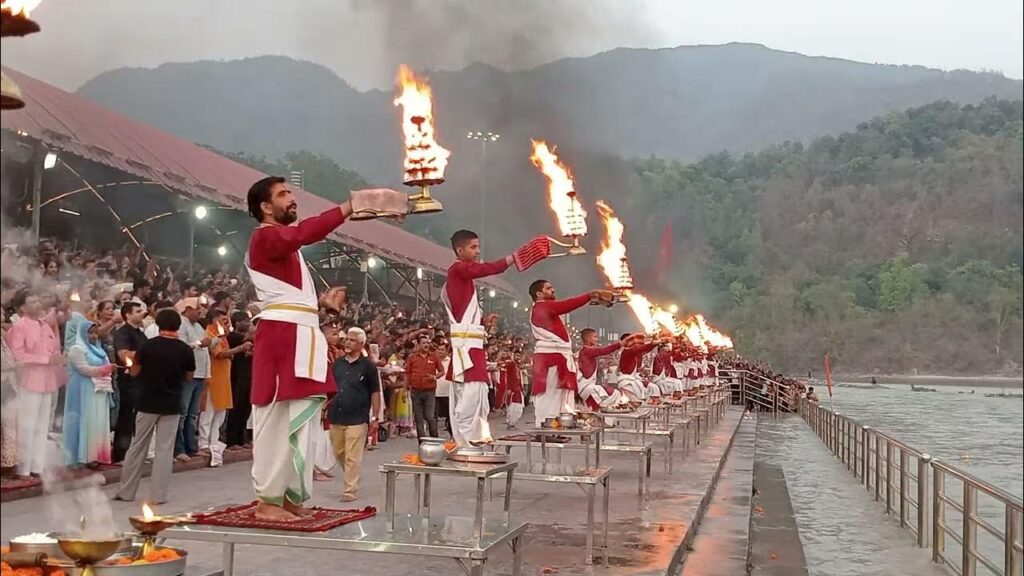
The Ganga Aarti is not a performance designed for tourists. It happens every single evening, rain or shine, festival day or not.The priests and ashram students begin the ritual with bhajans, move into synchronized lamp offerings, and close with a river immersion of diyas.Even if you're not religious, the atmosphere — fire, chanting, river mist, mountains fading blue in the last light — is something else entirely.
Two main venues:Parmarth Niketan (the most famous, beautifully choreographed, attended by people from everywhere)andTriveni Ghat (larger, more energetic, with drums and conch shells — the local's choice).Both are worth attending on separate evenings.
| GHAT | SUMMER (MAR–OCT) | WINTER (NOV–FEB) | MORNING AARTI |
|---|---|---|---|
| Parmarth Niketan | ~6:00 PM – 7:00 PM | ~5:30 PM – 6:30 PM | ~5:30 AM (sunrise) |
| Triveni Ghat | ~6:00 PM – 7:00 PM | ~5:30 PM – 6:00 PM | ~5:30 AM (sunrise) |
Sitting at the ghat as the sky goes from gold to deep violet, watching a hundred small diyas drift into the current — that's the moment most travellers say they understood what brought them to Rishikesh in the first place.
GOLDEN HOURS
Sunrise & Sunset Points
Few people know that Rishikesh has excellent dawn views if you're willing to get up early. These are worth the alarm.
🌅 Kunjapuri Temple — The Best Sunrise in the Region
Set at 1,676 metres above sea level, 25 km from Rishikesh, Kunjapuri Devi Temple offers an unobstructed panoramic view of the Garhwal Himalayas — including Gangotri, Kedarnath, Bandarpoonch, and Chaukhamba ranges — on clear mornings.
The trick is to leave Rishikesh by 4:30–5:00 AM for the 45-minute drive. Hundreds of steps lead to the summit. Cold, quiet, extraordinary. Best Months: October–December and February–March for clear skies.
🌄 Neer Garh Waterfall — Soft Morning Light & Forest Air
The trail to Neer Garh is best done early before the crowds arrive. The forest stays cool, the water is clearer, and the morning light filters through the trees in long golden bands.
Carry water shoes if you're visiting during monsoon months. The cafés near the entrance are surprisingly peaceful before 9 AM.
🌇 Tapovan Rooftops — Sunset Over the Ganga
Rishikesh sunsets aren't dramatic in the usual mountain sense. They're softer — the hills turn blue-grey, café lights slowly switch on, and the river reflects everything in muted copper.
The best views are from rooftop cafés around Tapovan and Laxman Jhula. Freedom Café, Little Buddha, and several guesthouse terraces face west toward the hills.
By the time the sky fades from orange to violet, the aarti lamps are lit.
Best Cafes in Rishikesh
Rishikesh punches far above its weight in cafe culture. These aren't just places to eat — they're the social connective tissue of the backpacker scene, with views, books, and a pace of life that rewards lingering.
Freedom Cafe
Perched over the Ganga with an open wooden deck that creaks pleasantly in the river breeze.The feel is part treehouse, part meditation — hammocks, low seating, bookshelves built into the walls.Banana pancakes and lemon ginger tea are the standard order.Conversation happens naturally here.
Little Buddha Cafe
Two floors of open-air seating with some of the best sunset views in town.It's been a traveller institution for years without becoming a tourist trap.The espresso is genuinely good, the continental food is reliable, and the vibe at golden hour is hard to beat.Come early for a window seat.
Beatles Cafe
Named in tribute, decorated in monochrome Abbey Road-era photography, and reliably full of people who've just returned from the ashram around the corner.The food is secondary to the atmosphere — mismatched furniture, vinyl on the walls, the kind of slow afternoon that makes you miss your return bus deliberately.
The 60's Cafe
A hippie-era time capsule that's somehow been going for decades.Colourful murals, low tables, cushioned floors, and a menu that mixes Israeli staples, Indian thalis, and baked goods baked on site.Popular with long-stay travellers who treat it as a living room.The chocolate brownie alone is worth seeking out.
Bistro Nirvana
Cleaner and slightly more polished than the others — white walls, curated plants, proper espresso machine.A spot that bridges the gap between Rishikesh's spiritual-backpacker DNA and a modern traveller's need for decent WiFi and a working power socket.The avocado toast exists. It shouldn't, but it's good.
Best Things to Do in Rishikesh
Rishikesh isn't a checklist destination. Most people come for one thing — yoga, rafting, spirituality — and accidentally stay for everything else.
River Rafting on the Ganga
The signature experience.Rafting routes range from beginner-friendly Shivpuri stretches to longer Grade III and IV sections beginning at Marine Drive.Water temperatures stay freezing even in summer, which somehow makes the experience better.Most rafting packages include transport, equipment, guides, and cliff jumping stops. Best season: late September to June.
Attend the Evening Ganga Aarti
Parmarth Niketan and Triveni Ghat host the two most famous ceremonies.Arrive early, sit quietly, and stay until the diyas are released into the river.It's less about religion and more about atmosphere — chanting, smoke, bells, orange sky, and the river carrying everything away slowly.
Visit the Beatles Ashram
Officially called Chaurasi Kutia, this abandoned meditation complex became globally famous after The Beatles stayed here in 1968.Today it feels half spiritual site, half open-air art gallery — graffiti-covered meditation domes, jungle pathways, and quiet corners overtaken by nature.Go early morning or late afternoon when the light becomes softer and the crowds thin out.
Take a Yoga or Meditation Class
Rishikesh has everything from drop-in beginner sessions to month-long teacher training programs.Some classes feel commercial, others deeply authentic.The better schools focus less on Instagram spirituality and more on discipline, breathwork, silence, and repetition.Even one serious session changes how you experience the city afterward.
Cafe-Hop Through Tapovan
Tapovan is built for slow afternoons.Rooftop cafes overlook the river, travellers exchange trekking plans, books move between tables, and time stretches unexpectedly.Some places become temporary offices, others accidental therapy sessions.Order coffee, stay longer than intended.
Scooty Ride to Neelkanth Mahadev
The winding mountain road to Neelkanth Temple is one of the best short rides around Rishikesh.Dense forest, sharp bends, monkeys on the roadside, sudden Himalayan viewpoints.The temple itself gets crowded during festivals, but the ride there is the real highlight.Start early to avoid traffic and afternoon heat.
Suggested 3-Day Itinerary
This isn't a minute-by-minute schedule. It's a loose framework that lets the city breathe. Adjust freely.
Arrive, Orient, and Feel the River
Check in to your hostel or guesthouse.Drop your bag, have chai.Walk to Ram Jhula or Laxman Jhula and simply watch the river for 20 minutes.Don't rush it.
Walk through Tapovan's main lane — find a cafe, eat something warm.Banana pancakes, a South Indian breakfast, or fruit bowl.Meet the other travellers at your hostel.
Visit the Beatles Ashram (open until 5 PM).Budget 1.5–2 hours.The ruins and murals reward slow exploration.Walk back through Swarg Ashram road along the ghats.
Attend the Ganga Aarti at Parmarth Niketan.Sit close to the river.Afterwards, have dinner near Laxman Jhula and end the night with a slow riverside walk.
Adventure & Mountain Air
Leave before sunrise for Kunjapuri Temple if weather conditions are clear.The Himalayan panorama is worth the alarm.
River rafting from Shivpuri or Marine Drive.Most operators provide transport, safety gear, and instructors.Carry dry clothes.
If rafting wasn't enough, this is the best window for adrenaline activities.Try Bungee Jumping at Mohan Chatti (India's highest fixed-platform jump), Giant Swing, or the Flying Fox zipline experience.Most operators provide transport from Tapovan and the full activity cycle usually takes 2–4 hours.Book early during October, March, and long weekends — slots disappear fast.
Rooftop dinner with mountain views.Most travellers unexpectedly end up in long conversations tonight.
Slow Down Before Leaving
Attend a yoga or meditation class.Even one proper session changes how you experience Rishikesh.
Scooty ride to Neelkanth Mahadev or walk around quieter ghats away from the crowds.
Final cafe stop.Buy books, malas, incense, or nothing at all.Rishikesh isn't really a shopping city.
One last look at the river before leaving.Most people promise themselves they'll return.
Safety Tips for Rishikesh
Rishikesh is genuinely safe for solo travellers, including women — but a few things are worth knowing before you go.
🚣 Rafting Operator Scams
Only book with operators who are licensed by the Uttarakhand Tourism Adventure Cell and provide proper life jackets, helmets, and trained river guides.Avoid "commission" tours pushed by hotel staff.Check that the raft is inspected before you get in.Don't raft during the monsoon — the river becomes genuinely dangerous.
🐒 Monkeys
Rishikesh has large troops of rhesus monkeys, especially near the temples and bridges.They are bold and will grab food, sunglasses, phones, and bags.Don't feed them, don't make eye contact, and don't hold food in the open.Keep bags zipped and worn close to the body in monkey-dense areas.
🛵 Traffic on Narrow Roads
The lanes around Tapovan and Laxman Jhula are narrow and shared by pedestrians, motorbikes, cows, and the occasional car.Walk on the right edge where possible and stay alert for silent scooters approaching from behind.
🌙 Late-Night Movement
Rishikesh is alcohol-free and largely peaceful after dark.Stick to well-lit main roads after 9 PM.Shared autos become infrequent after 10 PM — especially outside Tapovan.If returning late, use trusted taxi contacts from your hostel.
💧 Drinking Water & Food
Avoid untreated tap water.Use filtered hostel water or sealed bottles.Street food is usually fine in busy areas, but avoid empty stalls during summer afternoons.Electrolyte packets help during hotter months.
🏔 Weather & Trek Conditions
Weather changes quickly in the hills around Rishikesh.Carry a light layer even in warmer months.During monsoon season, landslides occasionally affect roads toward Neelkanth, Kunjapuri, and nearby mountain routes.
Network, WiFi & ATMs in Rishikesh
Rishikesh is far more connected than most Himalayan towns, but signal quality still changes dramatically depending on where you stay.Tapovan and Laxman Jhula generally have the best infrastructure, while riverside and hill-facing properties can become unreliable during rain or power cuts.
📶 Best Mobile Networks
Jio usually performs best in Tapovan, Laxman Jhula, and central Rishikesh.Airtel is slightly more stable in certain riverside cafes and elevated areas.Vi and BSNL work inconsistently.If you're staying longer than a week, carrying both Jio and Airtel is genuinely useful.
💻 Cafe WiFi Situation
Most backpacker cafes provide free WiFi, but speeds vary heavily by time of day.Bistro Nirvana, Little Buddha, and several Tapovan cafes are popular with remote workers.During power cuts, many cafes switch to backup systems with reduced internet speeds.
🏧 ATM Availability
ATMs are easy to find in Tapovan, Ram Jhula, and near the main market.SBI, HDFC, ICICI, and PNB machines are the most common.However, cash shortages happen during long weekends, festivals, and peak rafting season.Don't wait until your balance reaches zero.
💵 Cash vs UPI
UPI works almost everywhere now — cafes, hostels, rafting shops, and even some roadside stalls.Still, keep ₹1,000–₹2,000 cash available for autos, smaller tea stalls, temple donations, and network outages.
During heavy monsoon rain, both electricity and mobile data can become unstable for short periods.Download maps offline before long rides toward Neelkanth, Kunjapuri, or Shivpuri.
Nearby Places to Visit from Rishikesh
Rishikesh is the gateway to several of Uttarakhand's most spectacular destinations.These can work as day trips or extended journeys.
Haridwar
The larger, grander sibling of Rishikesh on the Ganga.Har Ki Pauri is where the Haridwar Ganga Aarti happens — bigger and more theatrical than Rishikesh's.A classic day trip, or catch the evening aarti before returning.
Read the Haridwar Guide →Shivpuri
The rafting base.This is where the most popular stretch of white water starts.Several good riverside camps here for multi-night stays.Quieter than Rishikesh and more immediately surrounded by hills.
Neelkanth Mahadev
One of the most significant Shiva temples in Uttarakhand, deep in the forest above Rishikesh.The drive there is as good as the temple itself.Best done by scooty or hired cab.Arrive early to avoid pilgrimage queues.
Kunjapuri Temple
The best sunrise point near Rishikesh.Covered in full in the itinerary above.Also a Shakti Peetha — one of the 52 sacred sites in Hindu tradition.The views on a clear morning are unforgettable.
Rajaji National Park
The nearest major wildlife reserve, home to elephants, leopards, and a significant tiger population.Jeep safaris operate from Chilla range (best season October–June).An underrated extension that most Rishikesh visitors miss entirely.
What to Pack for Rishikesh
Rishikesh isn't a difficult destination to pack for, but the mix of rafting, yoga, mountain mornings, dusty roads, and cafe days means smart packing matters more than heavy packing.
RAFTING & ADVENTURE
- Quick-dry shorts or swimwear
- Water shoes or sandals that strap
- Dry bag or waterproof pouch
- Sunscreen (SPF 50+)
- Change of clothes for post-raft
- Small towel (microfibre)
CAFE & TOWN DAYS
- Light cotton clothing (salwar, linen)
- Shawl or stole (for temples & evenings)
- Comfortable walking shoes
- Power bank & charger
- Book or journal
- Reusable water bottle
WEATHER & HILLS
- Fleece or light jacket (year-round)
- Thermal base layer (Oct–Feb)
- Rain jacket or poncho (Jul–Sep)
- Sunglasses (UV-rated)
- Lip balm & moisturiser (dry air)
ESSENTIALS & HEALTH
- Cash in small denominations
- Government ID (for adventure sports)
- Basic first aid (antacids, ORS)
- Personal medications
- Insect repellent (monsoon months)
- Mosquito patches if camping
A Last Word Before You Go
Every few years, a place earns the word "transformative" and then gets written into the ground by travel content until it means nothing.Rishikesh is still the real thing — not because it hasn't changed, but because the Ganga hasn't.The river is still cold and fast and indifferent to whether you're a pilgrim or a backpacker or someone who just needed to get out of the city for a few days.
What Rishikesh does quietly and reliably is slow you down.The cafe on the river deck where the afternoon slips away. The 5 AM silence before Kunjapuri. The moment the aarti lamps hit the water and the whole crowd goes still.You don't plan for those things — you just show up and let them happen to you.
Come with enough time to be bored once or twice.That's when the good stuff happens — the conversation with the stranger at the hostel who changes your travel plans, the trail you walk down on a whim, the cafe you return to every morning for no reason except it feels like yours.
Rishikesh is not a destination you cross off a list.It's the kind of place that waits — and gets better every time you return.
— TRAVELCODAIf you're extending into the Garhwal Himalayas, our guides to Chopta ,the Tungnath–Chandrashila trek (one circuit, two summits), and Deoria Tal pick up exactly where Rishikesh leaves off.The mountains only get better from here.
Updated for 2026 · Written by TravelCoda